The Design Choices That Made the Space Work
Opening up the floor plan
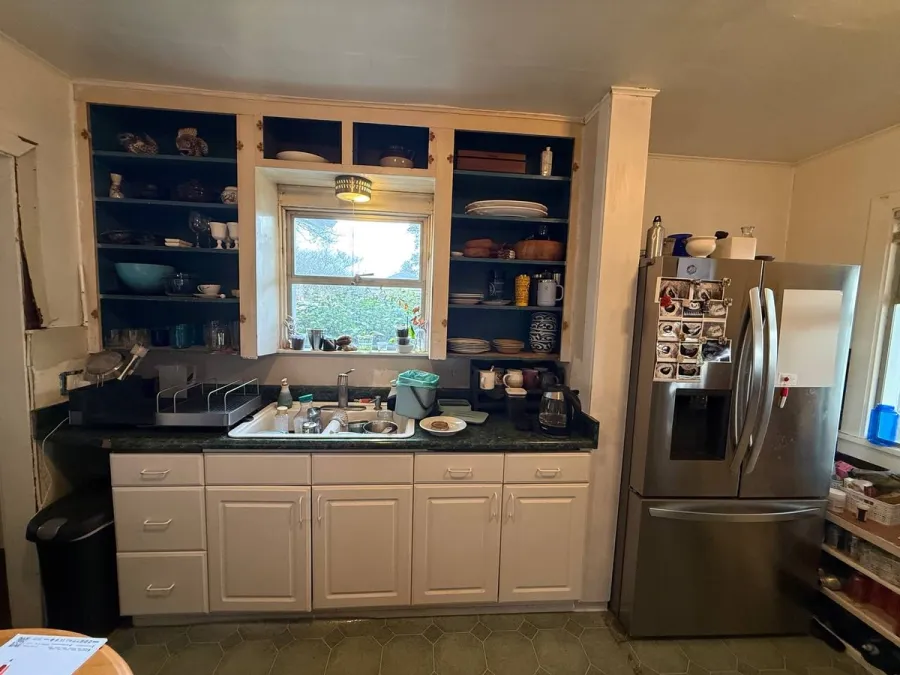
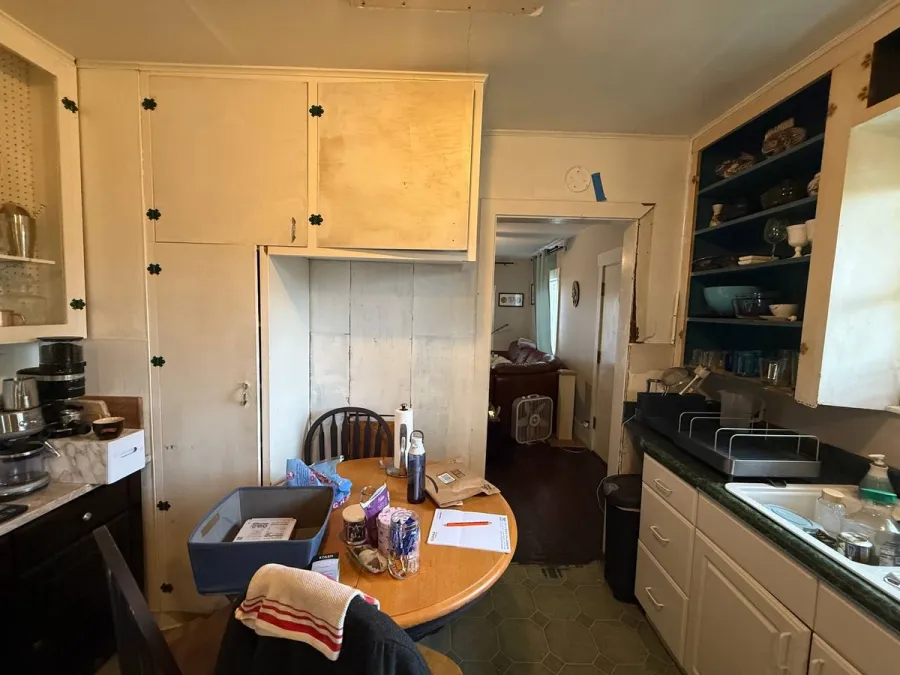
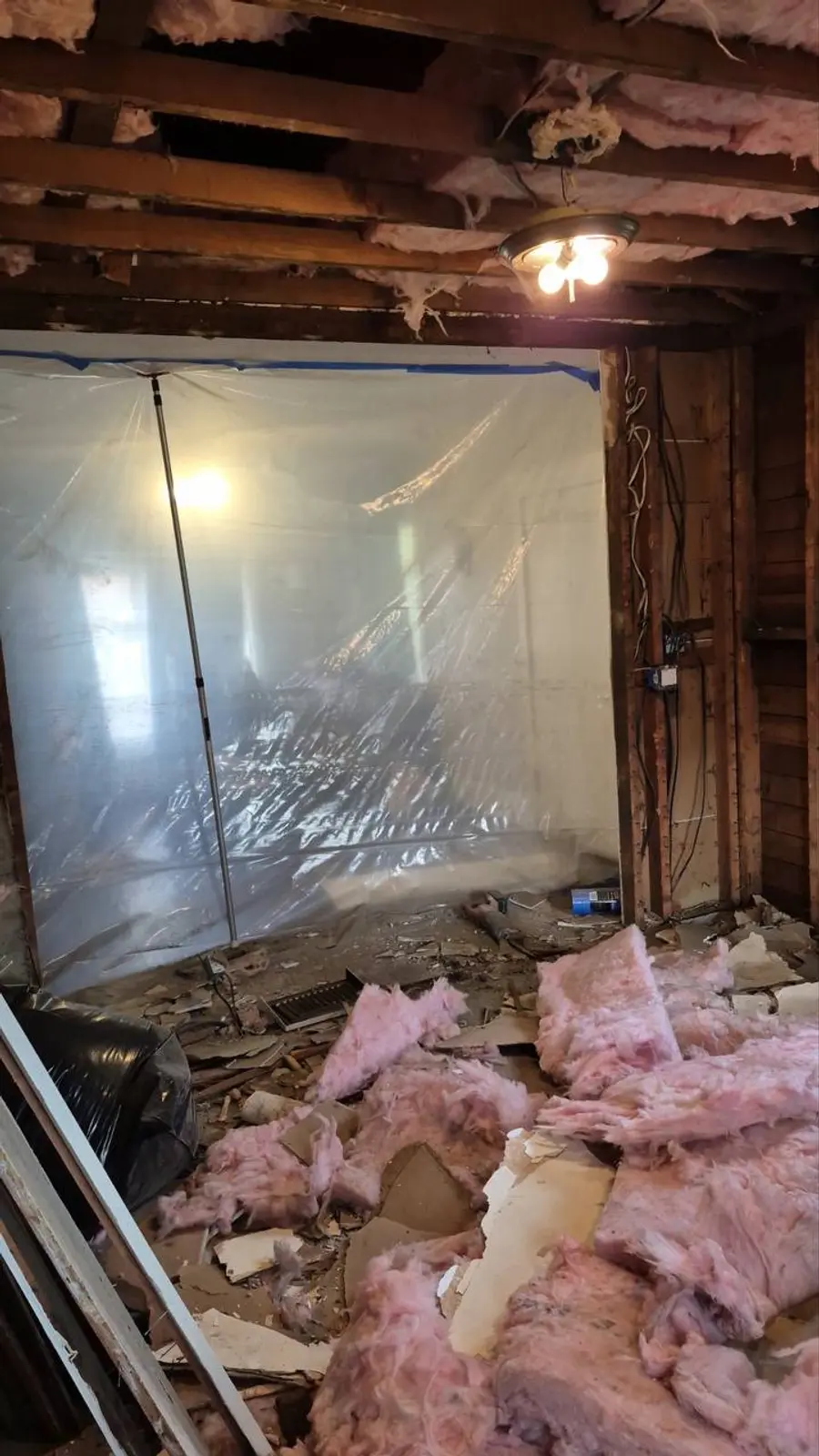
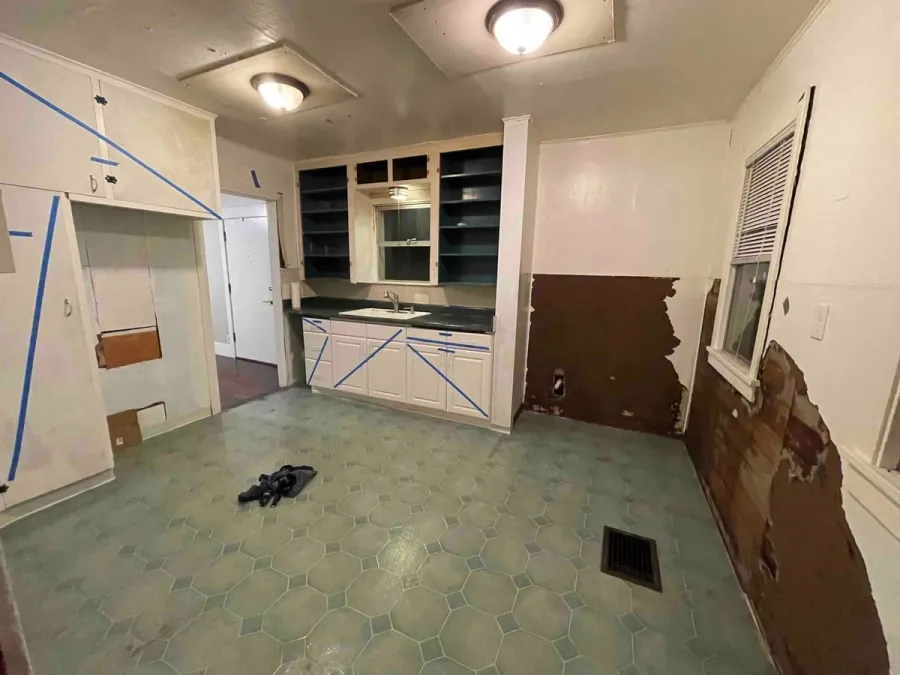
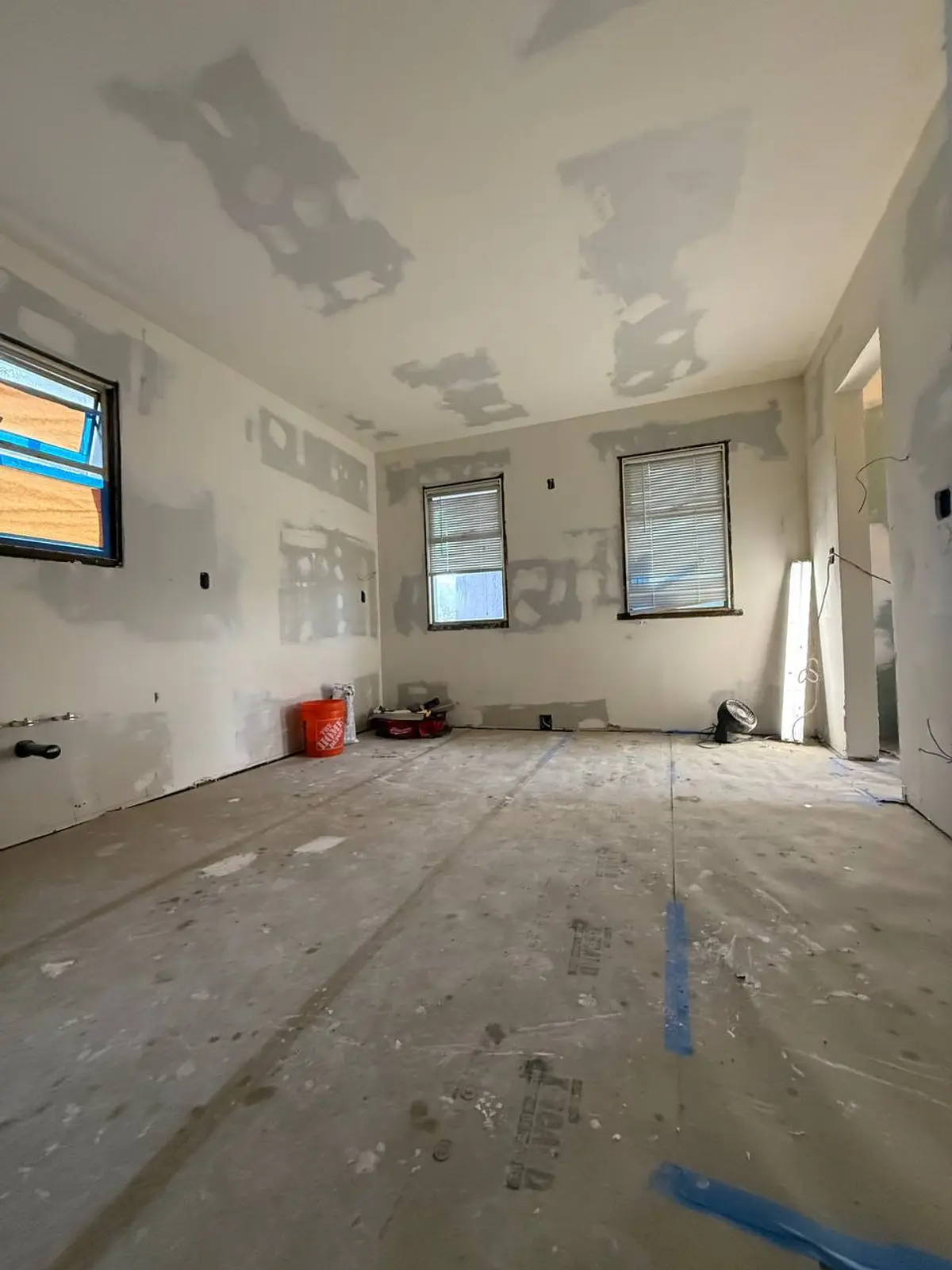
The dividing wall between the kitchen and living room came out. With the structural work properly engineered, the kitchen became part of the main living space rather than a closed-off room. Daylight from the living room windows now reaches the kitchen, and the visual square footage roughly doubled.
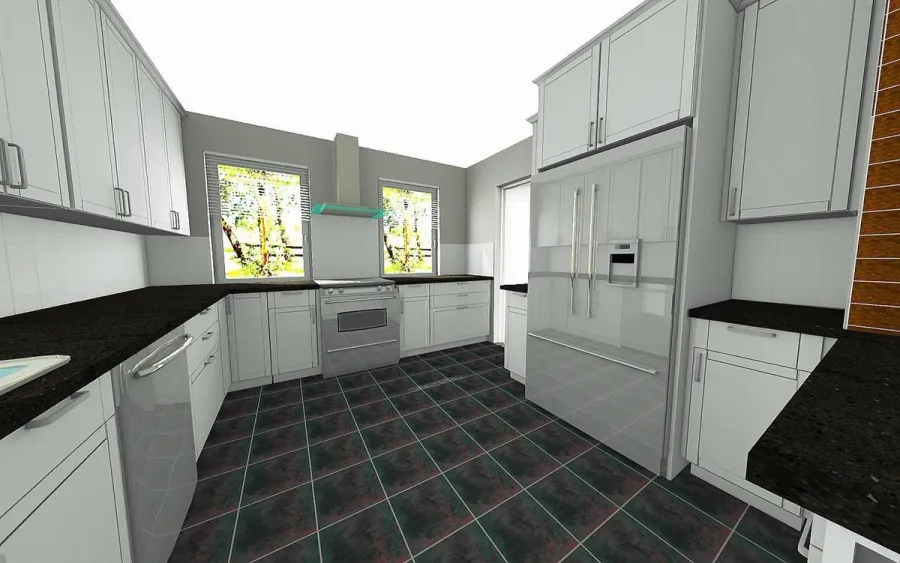
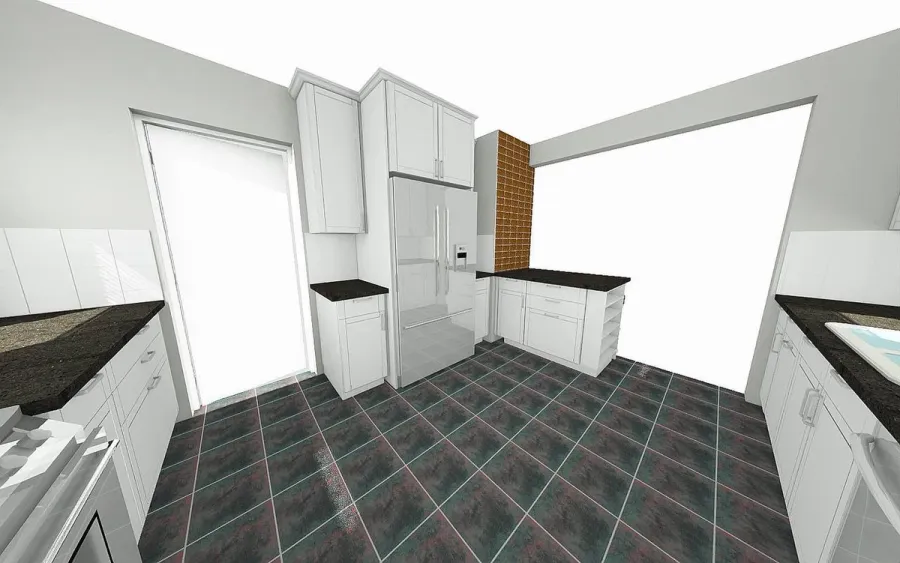
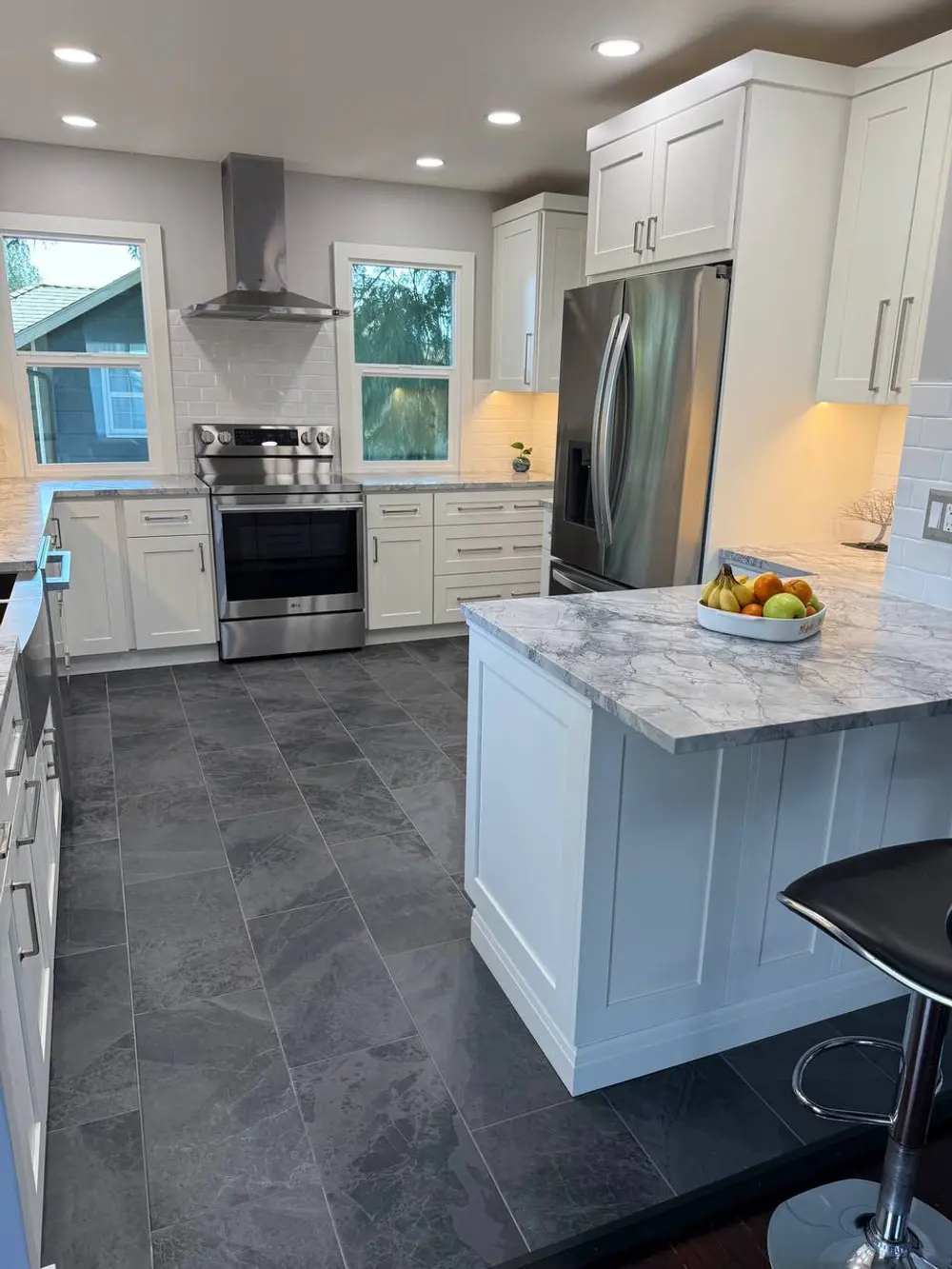
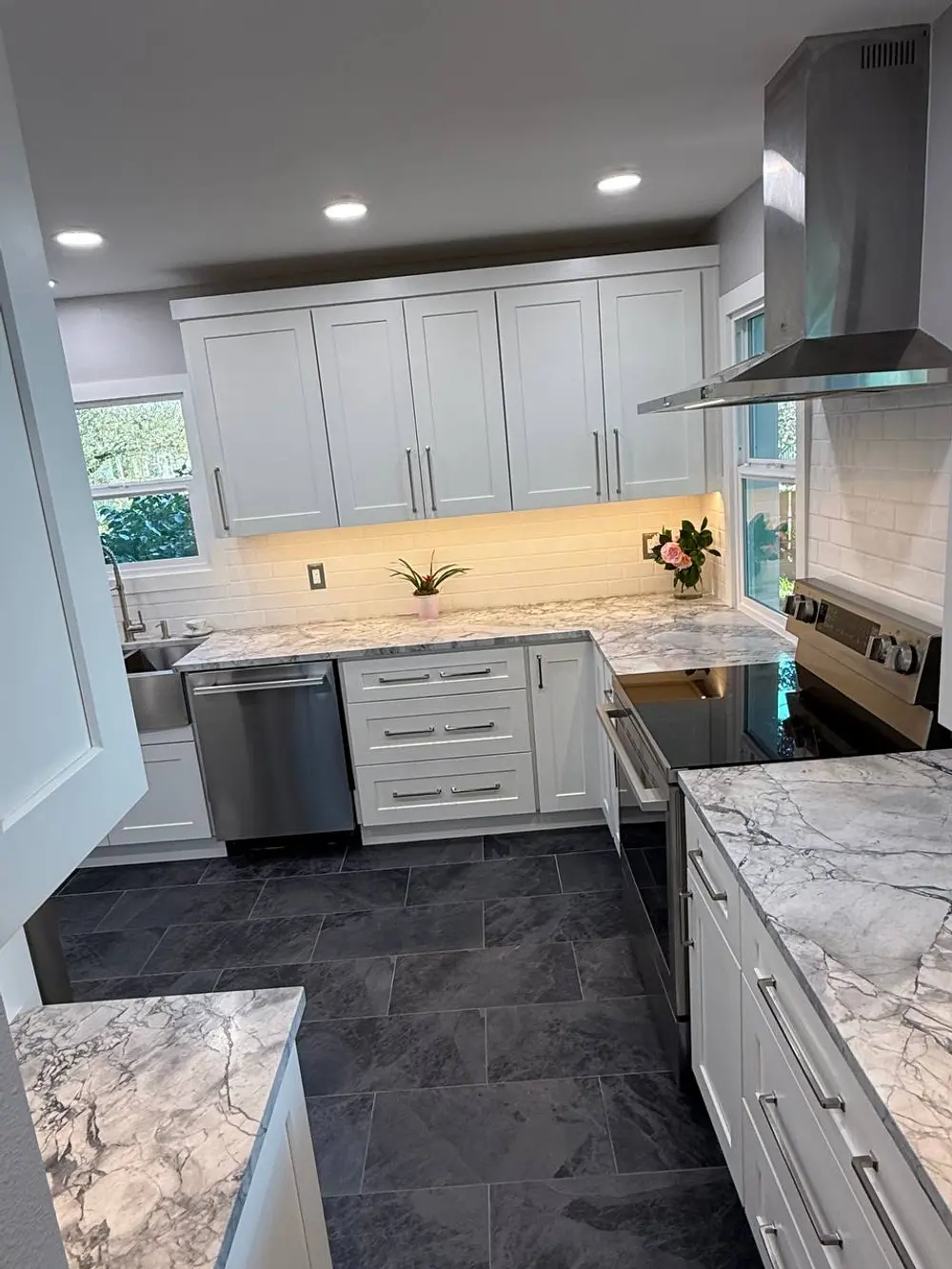
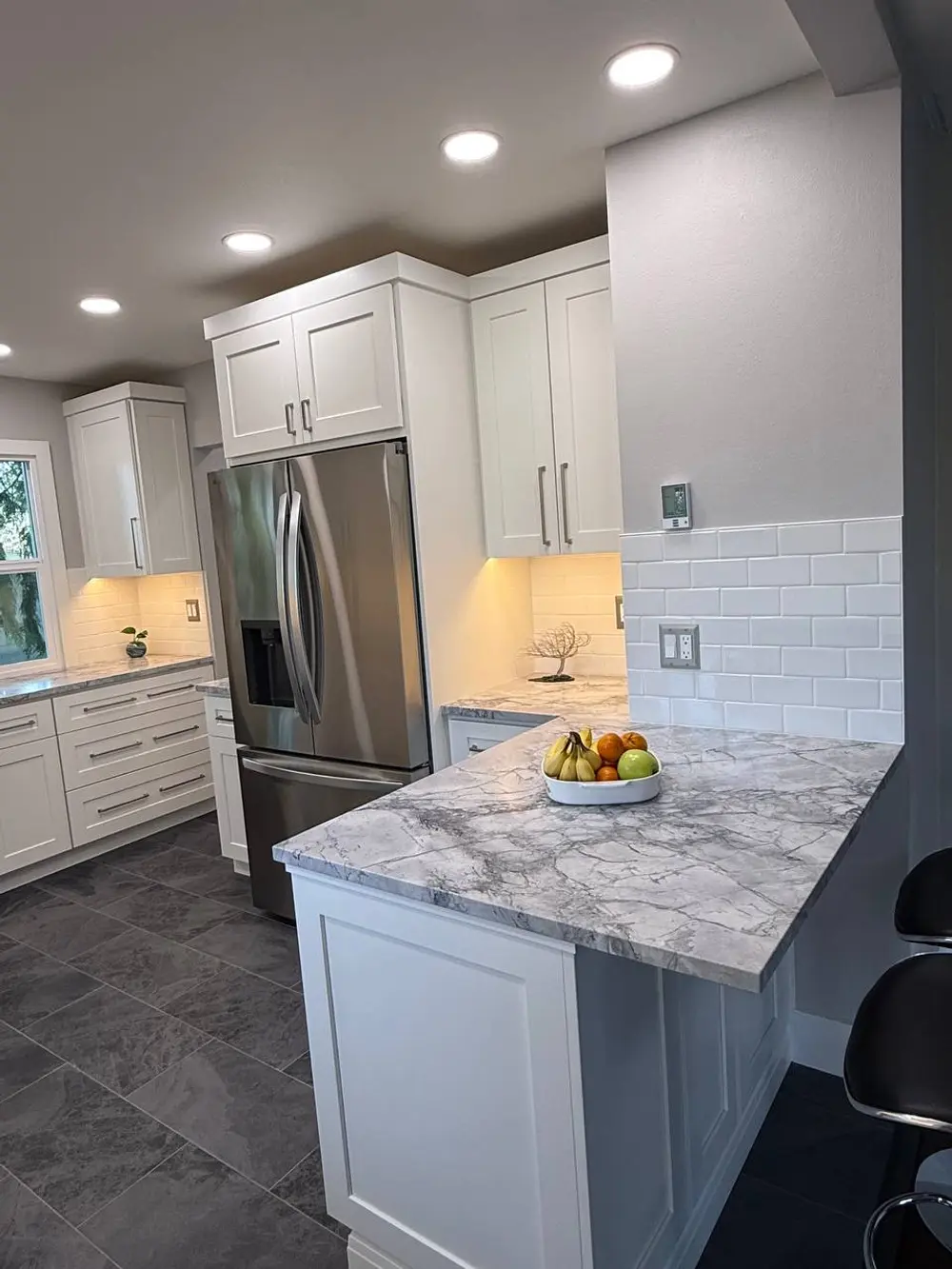
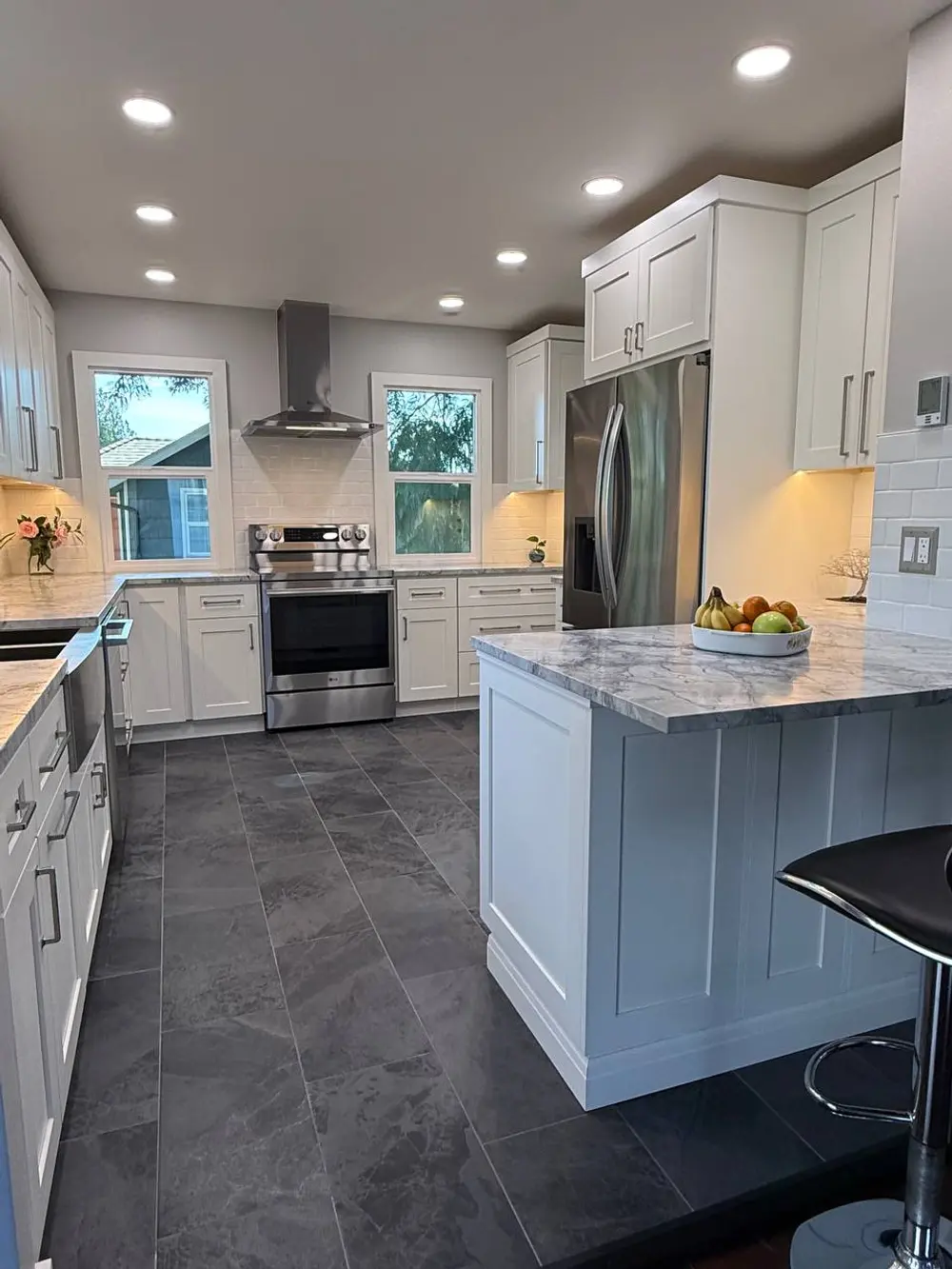
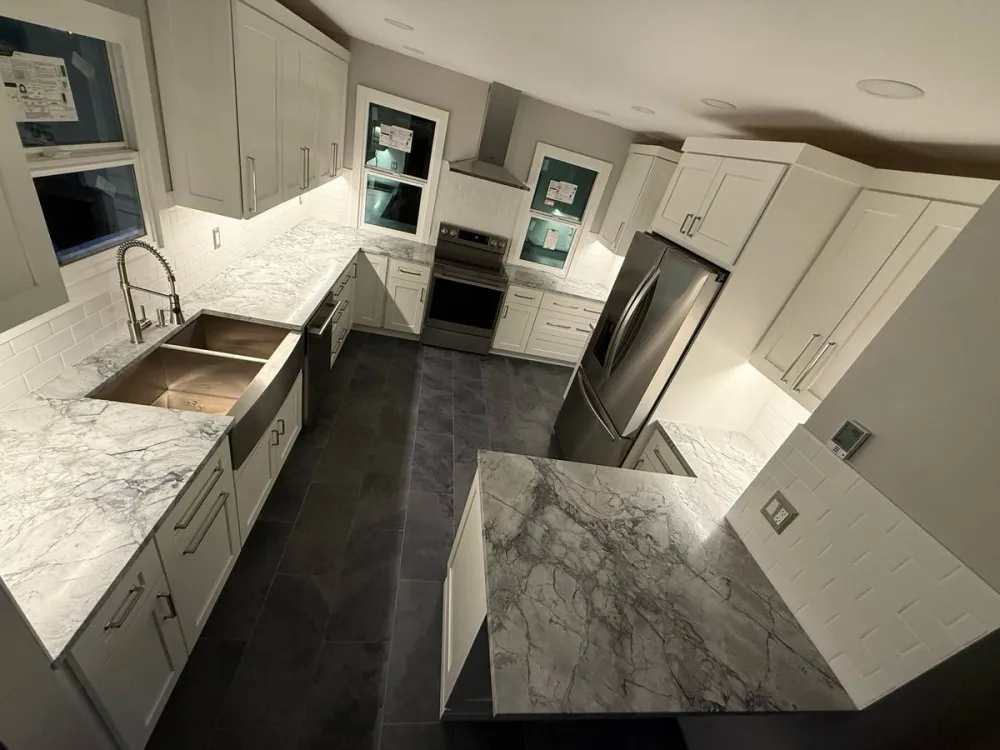
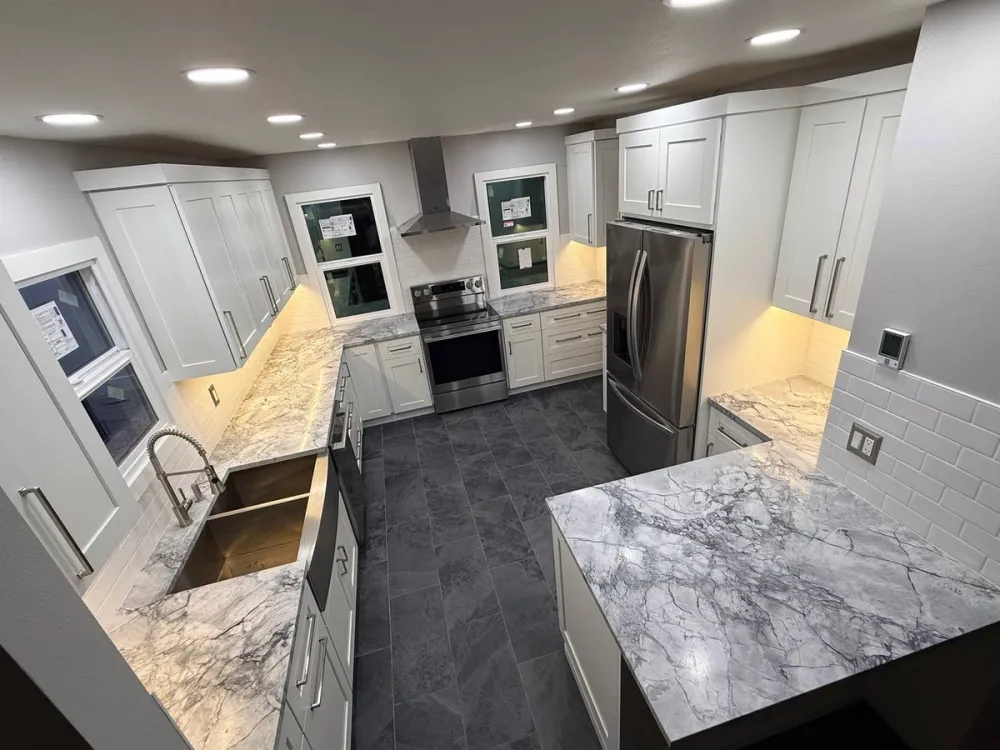
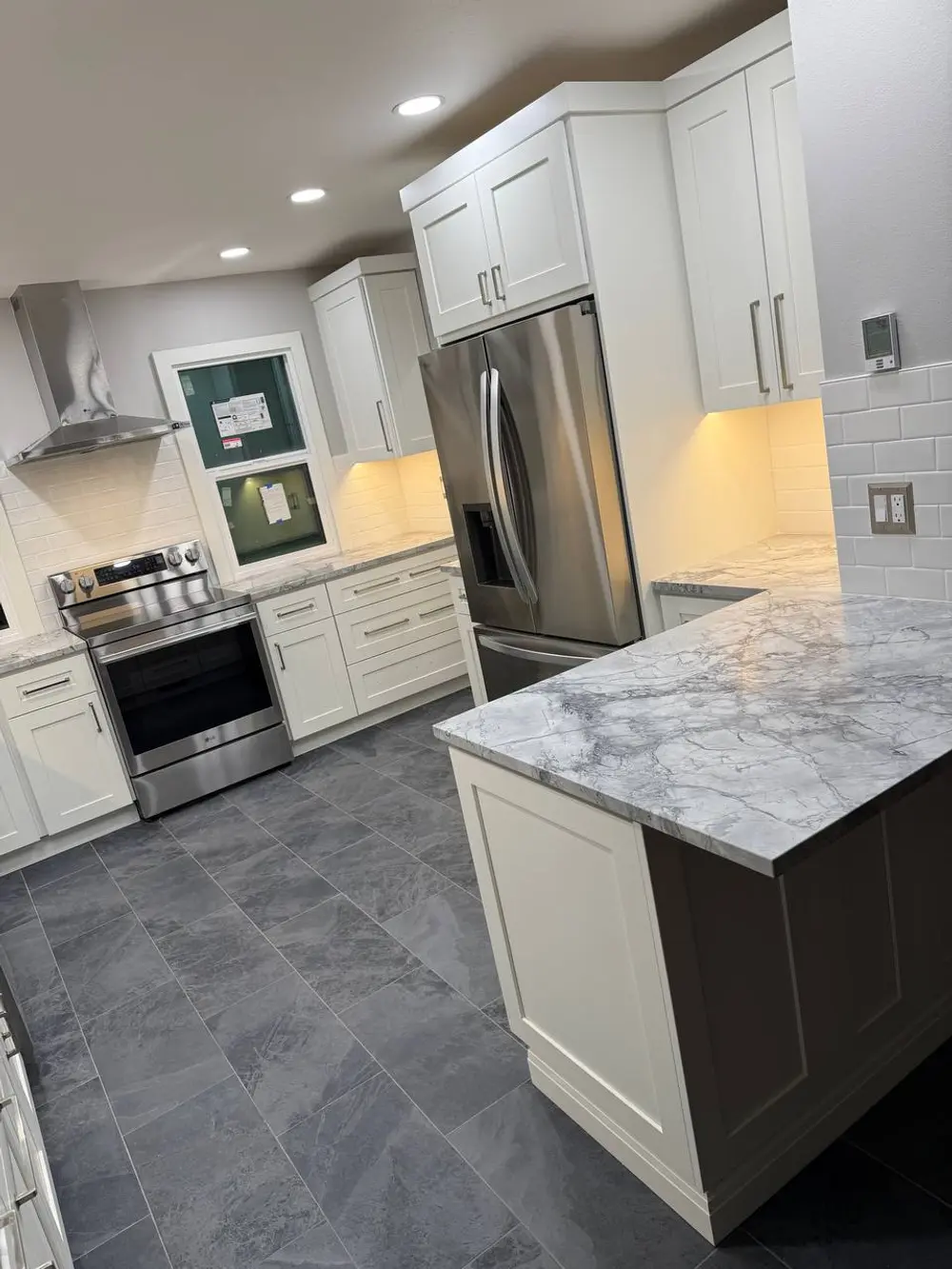
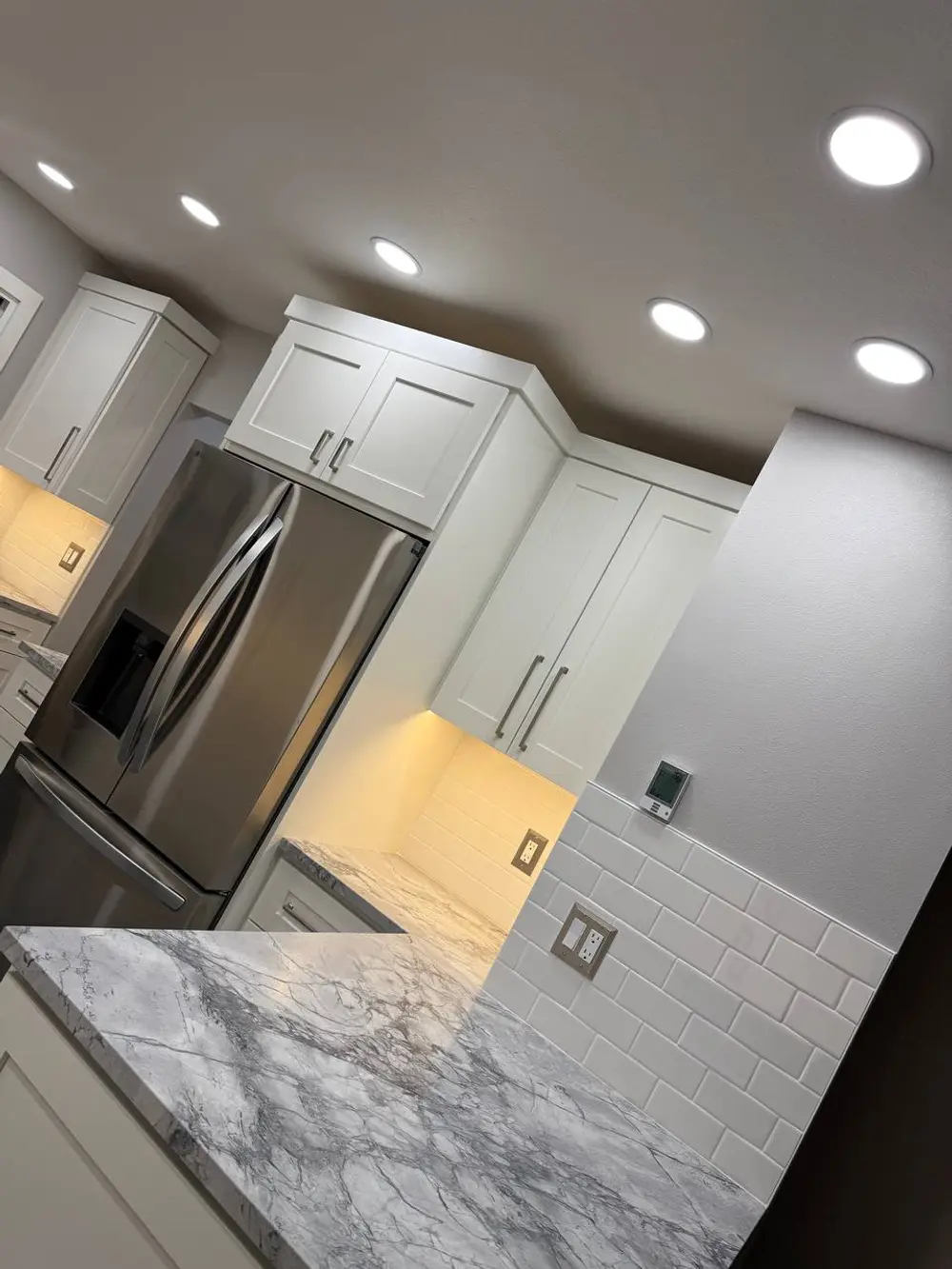
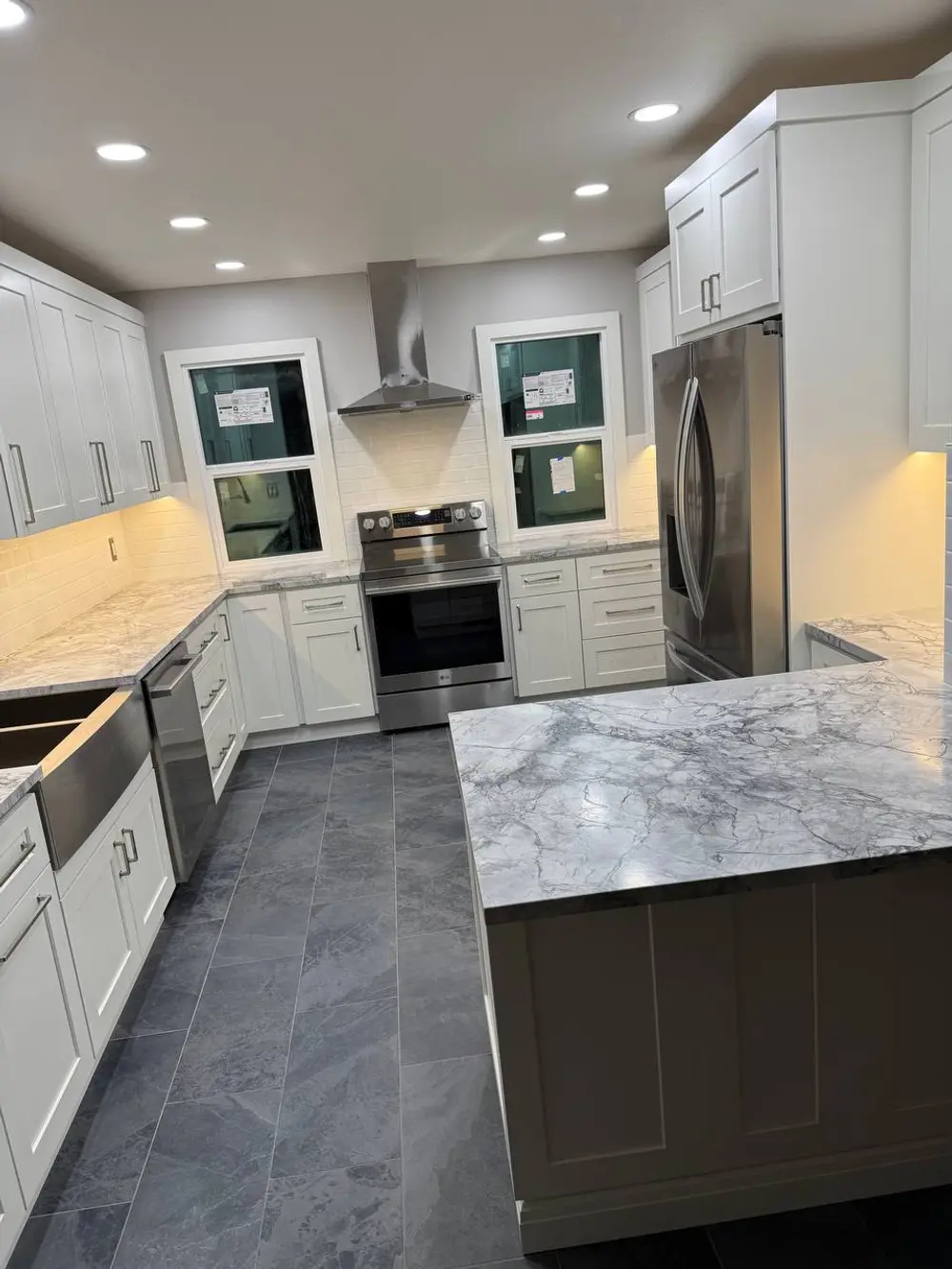
In its place we built a peninsula. Two seats face the living room side, giving the family a casual place for breakfast, homework, or chatting with whoever is cooking. The peninsula does the work the old wall used to do, defining the kitchen as a kitchen, but without blocking light or sightlines.
A clean white-and-gray palette to amplify light
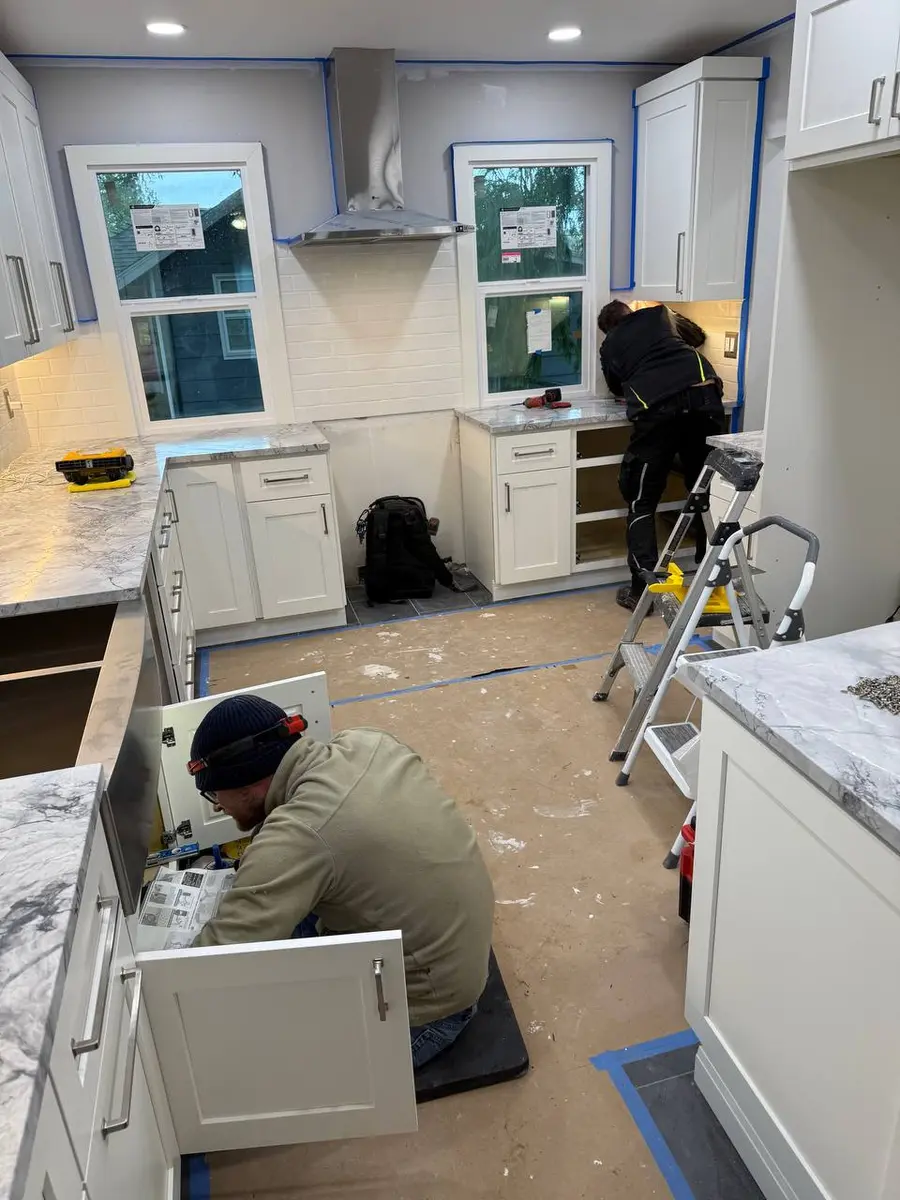
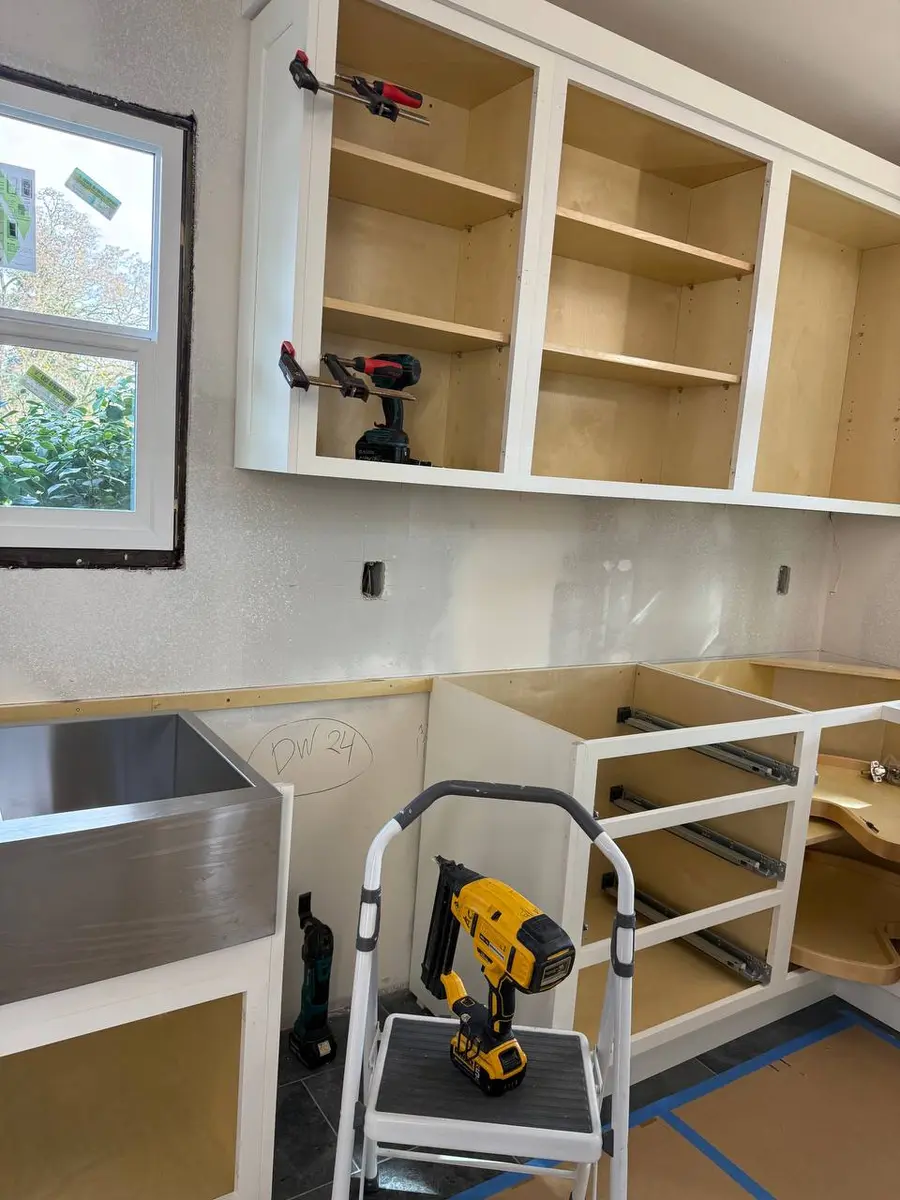
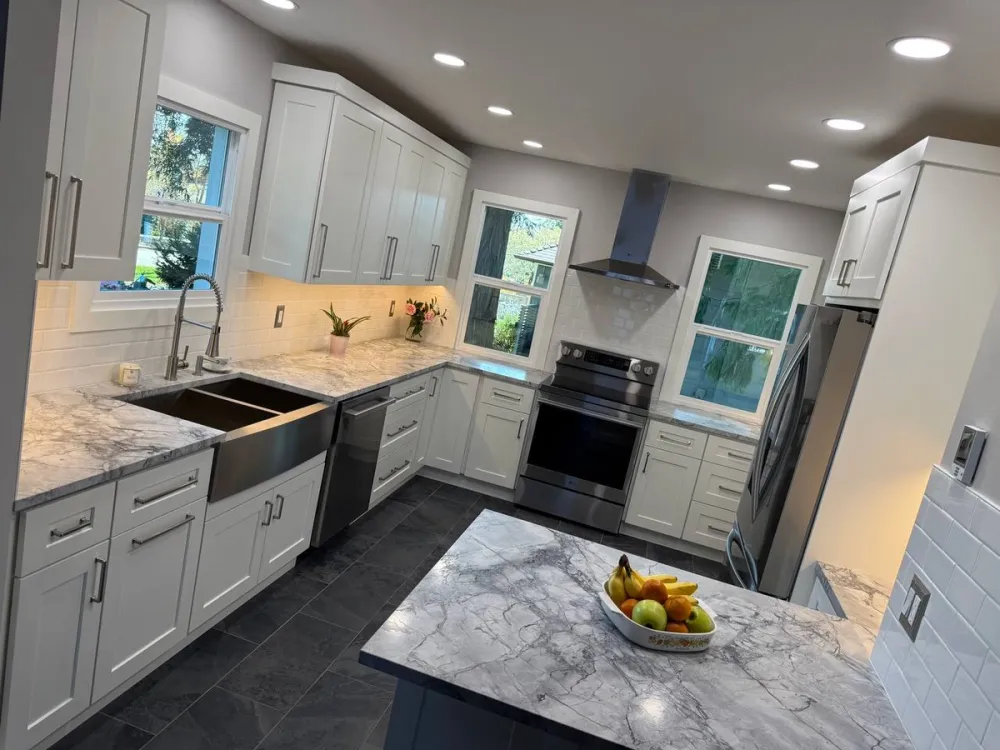
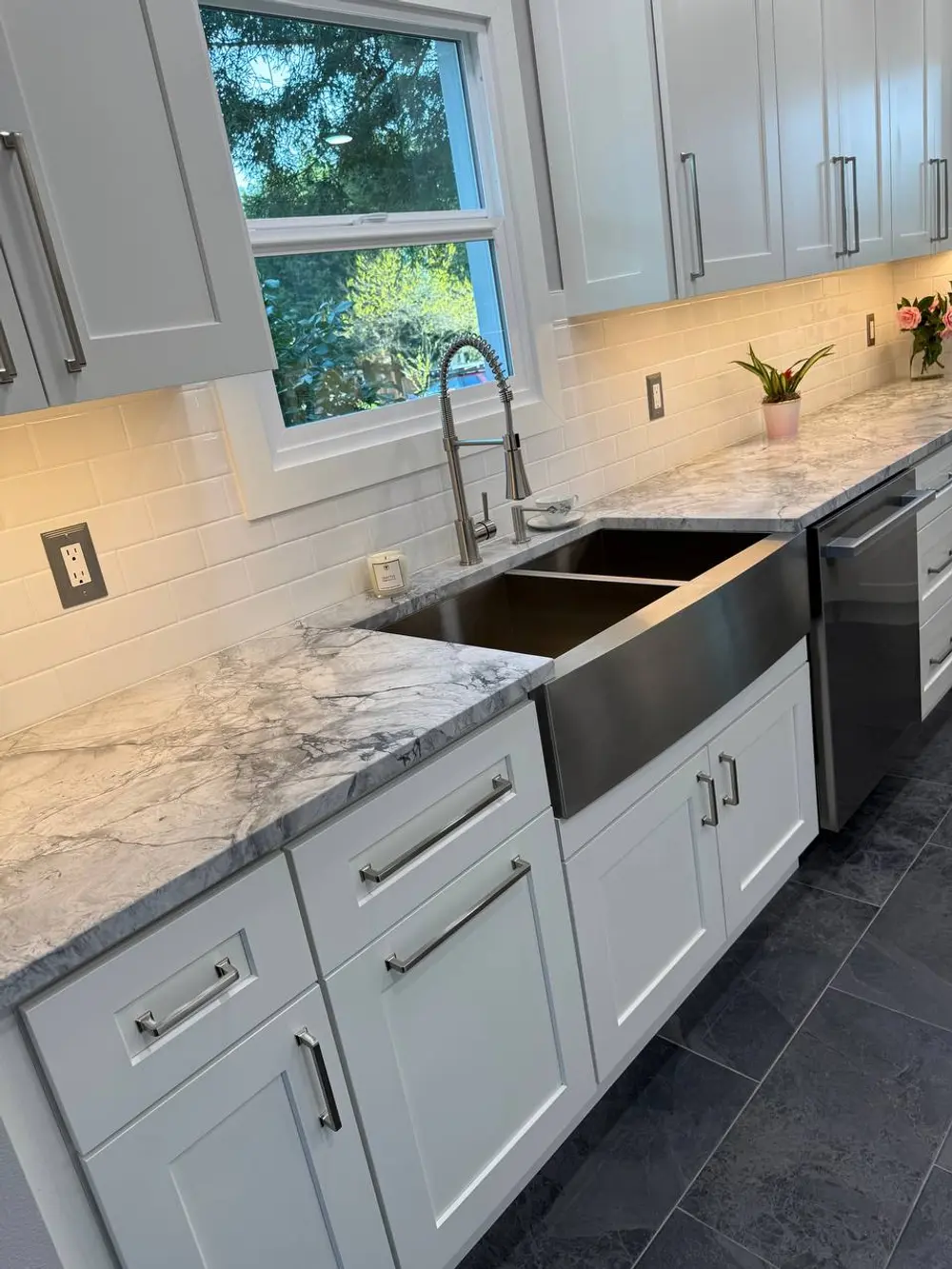
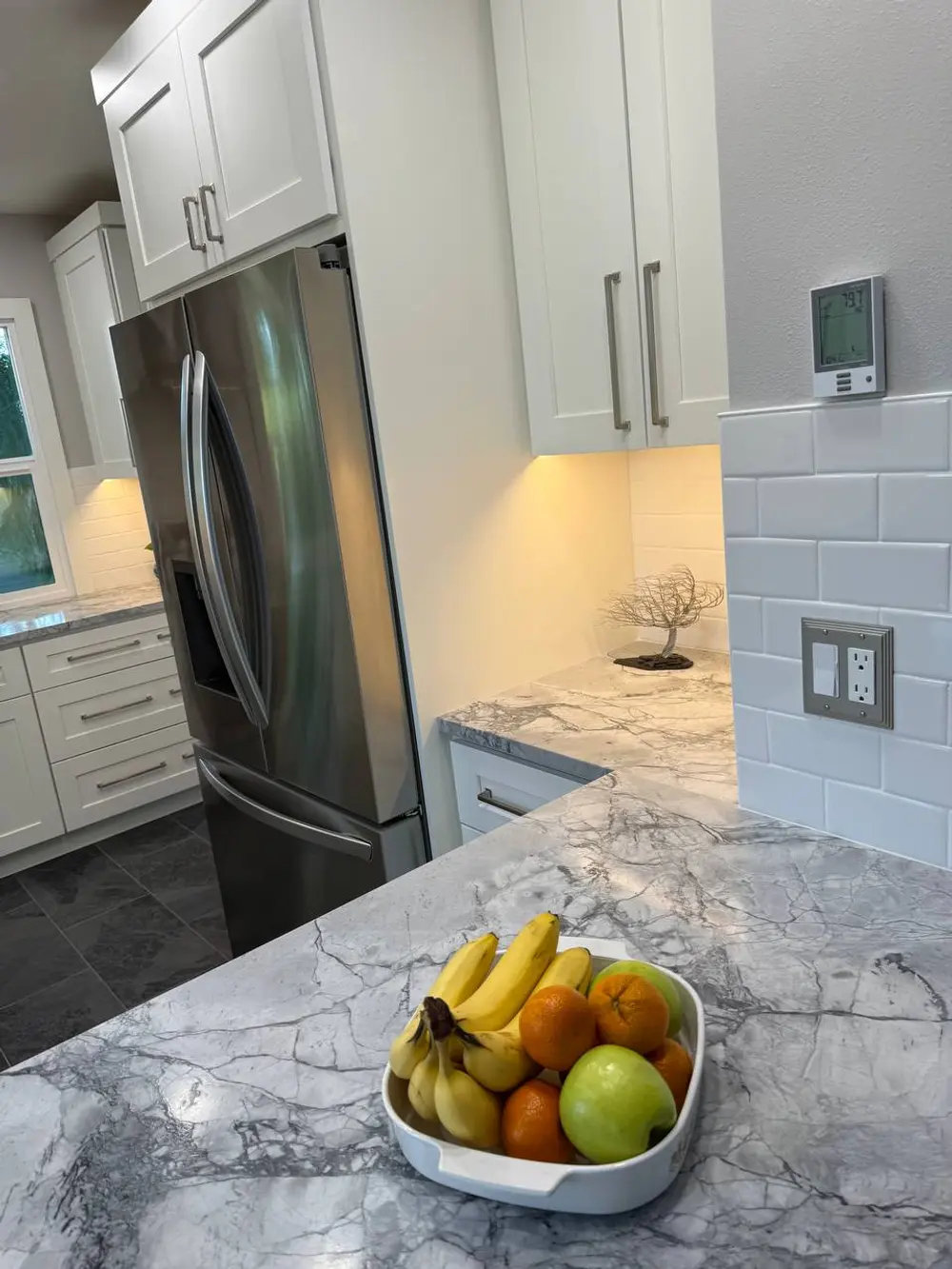
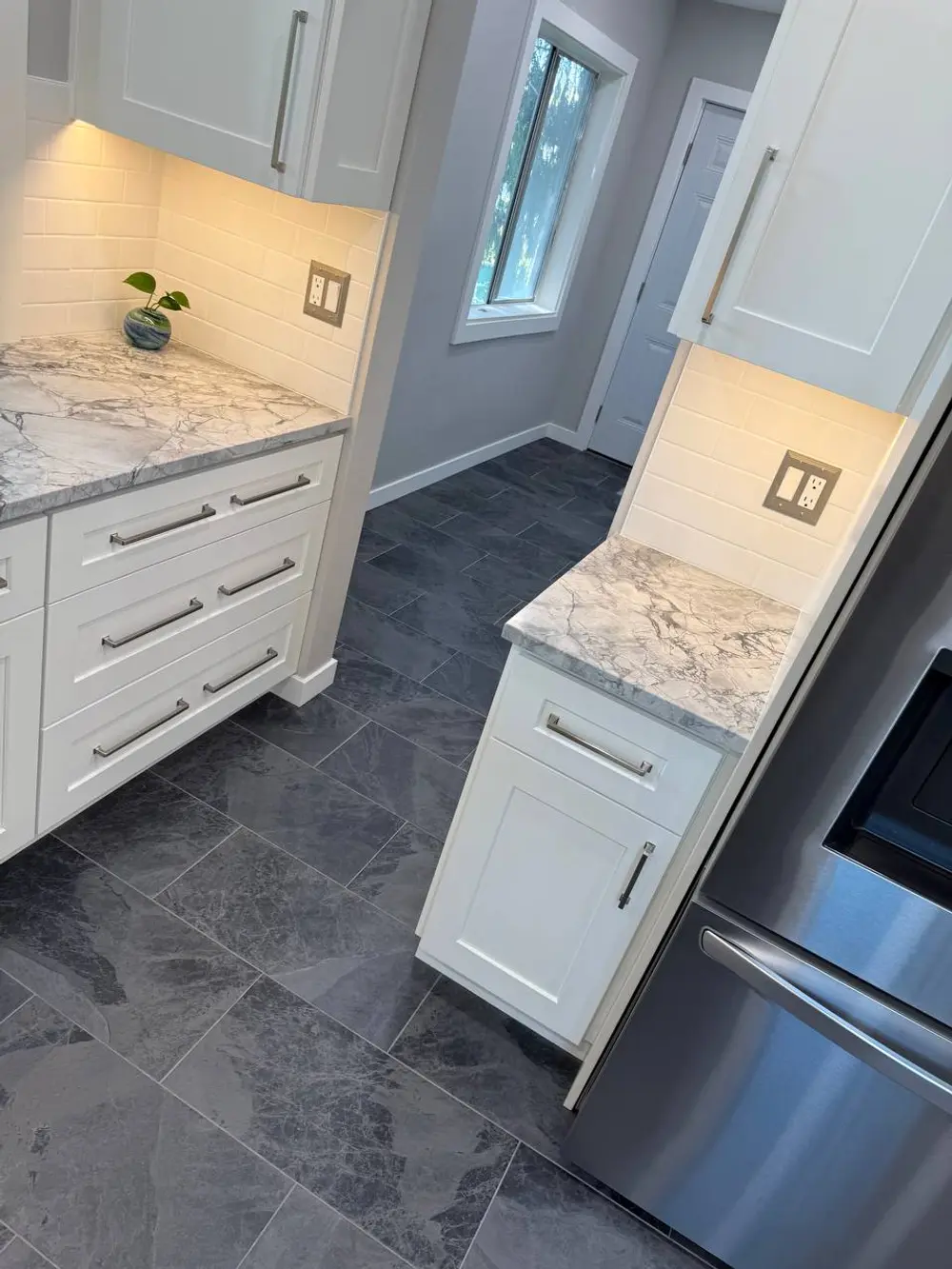
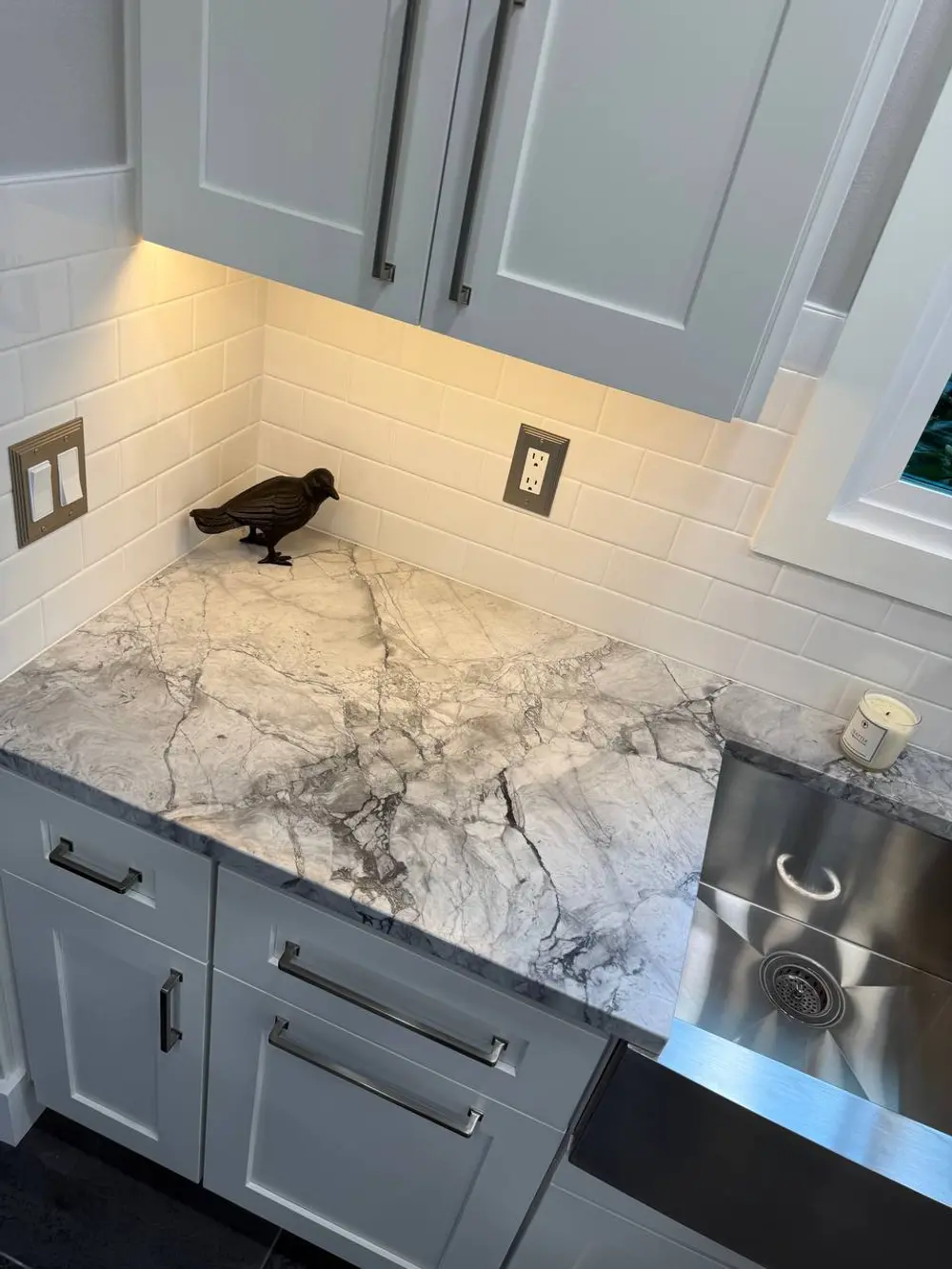
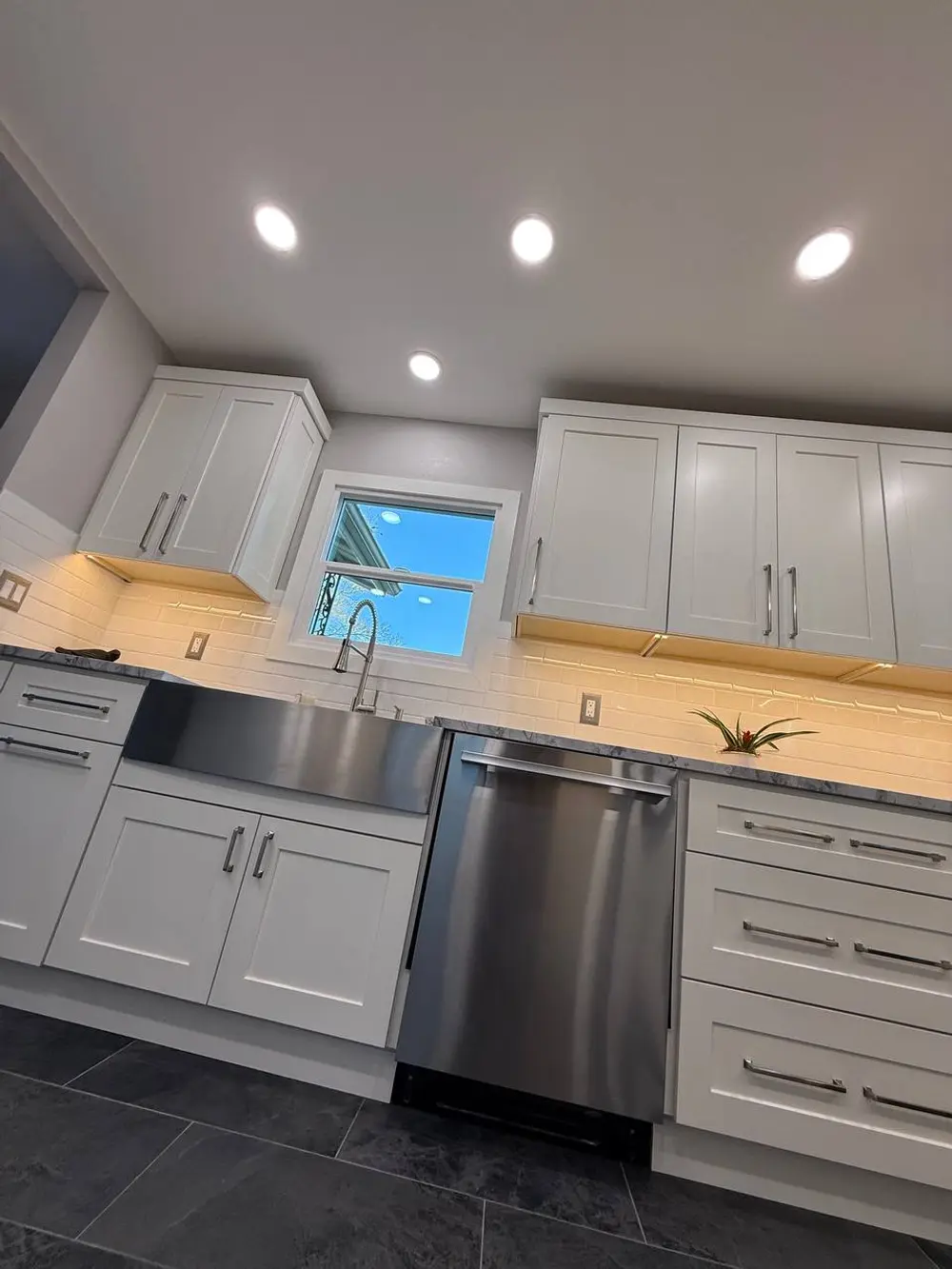
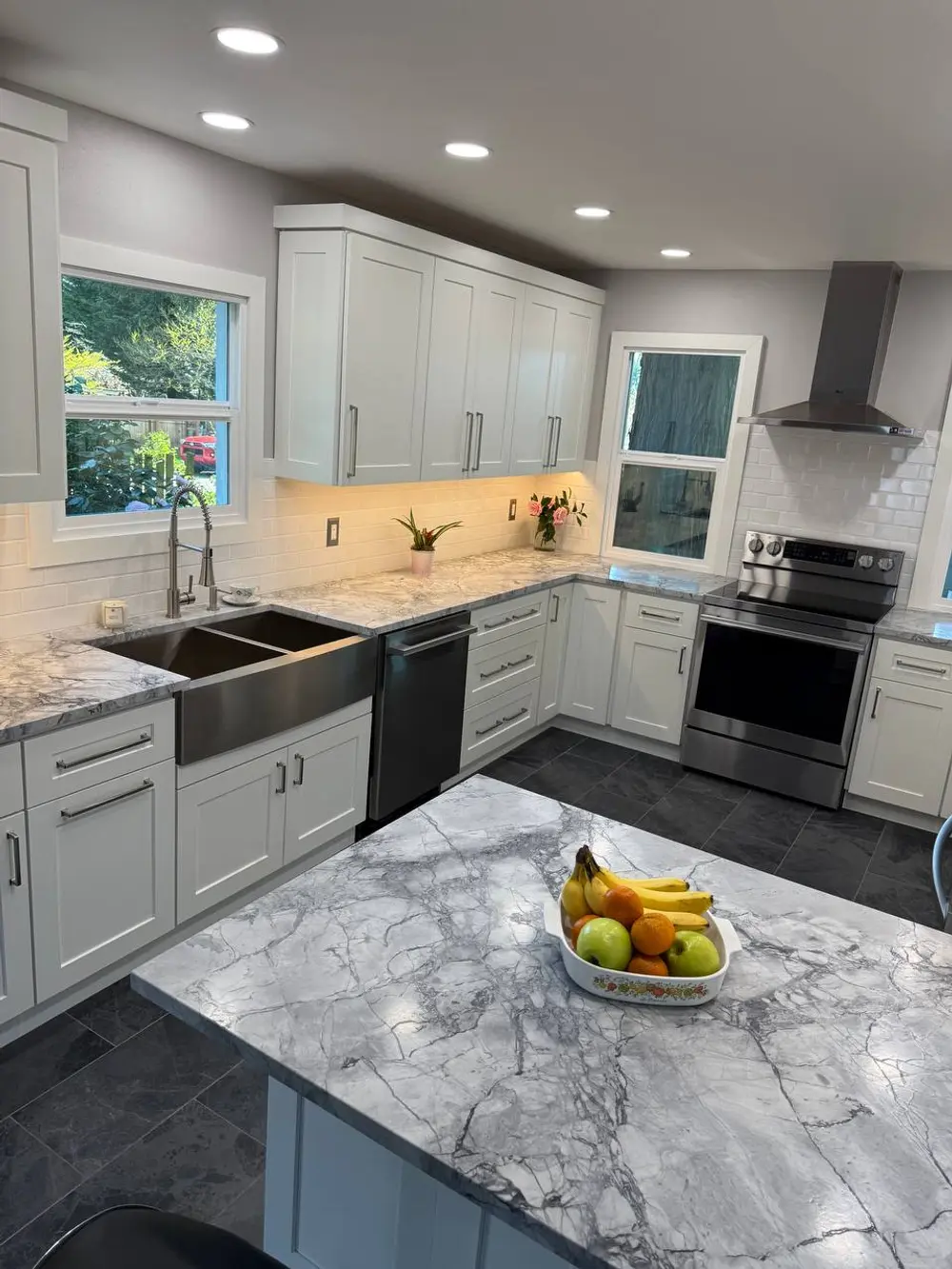
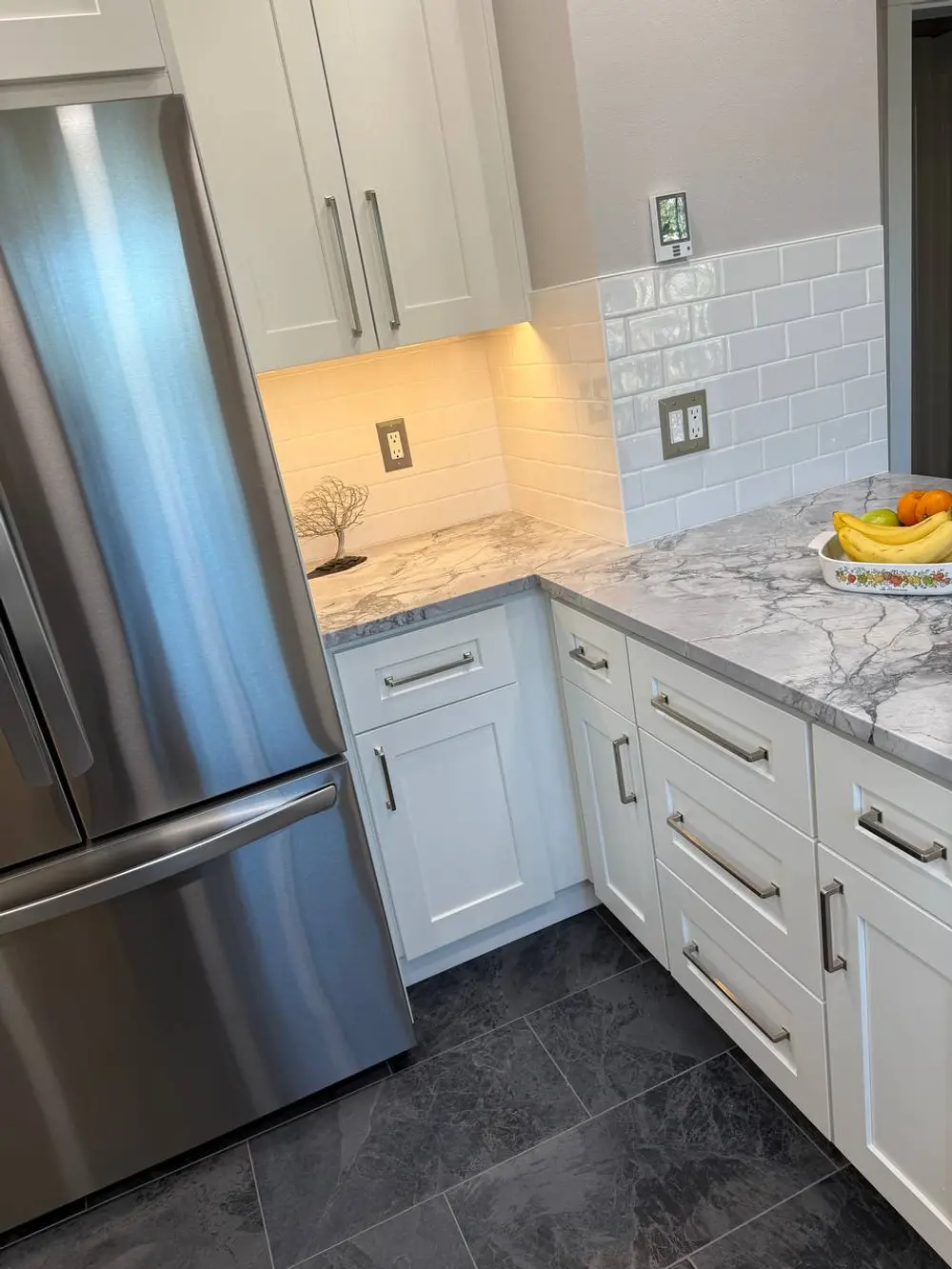
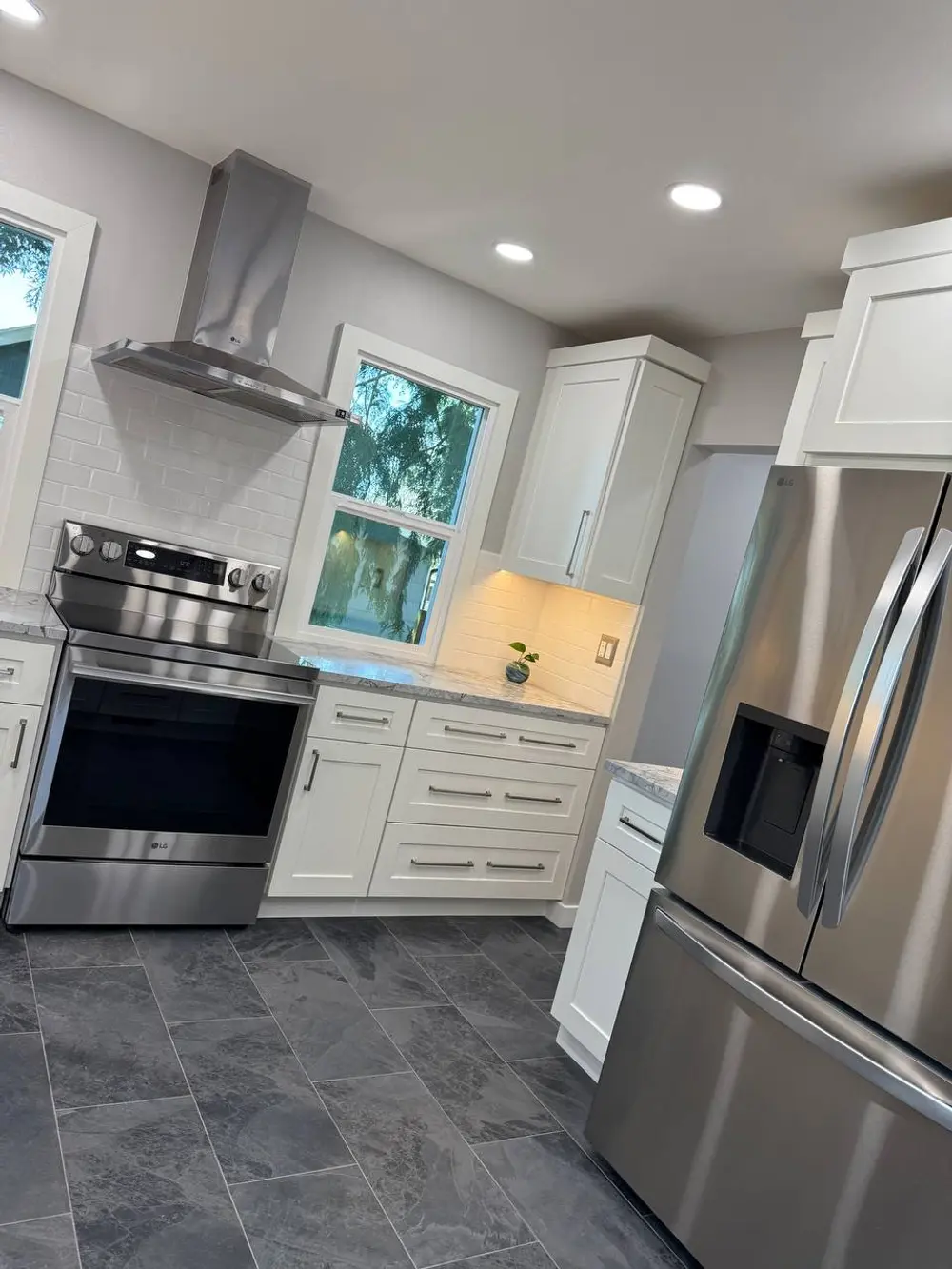
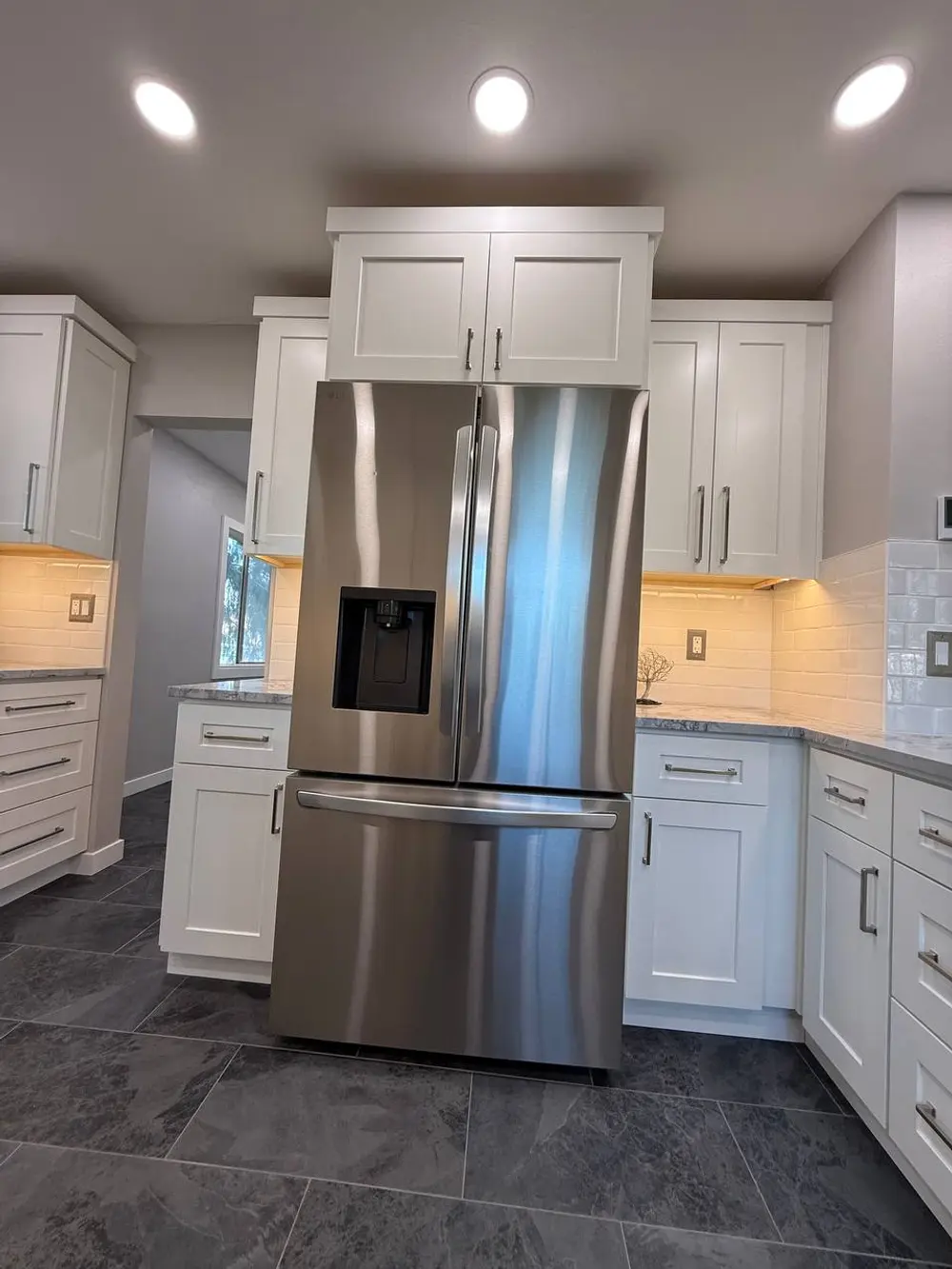
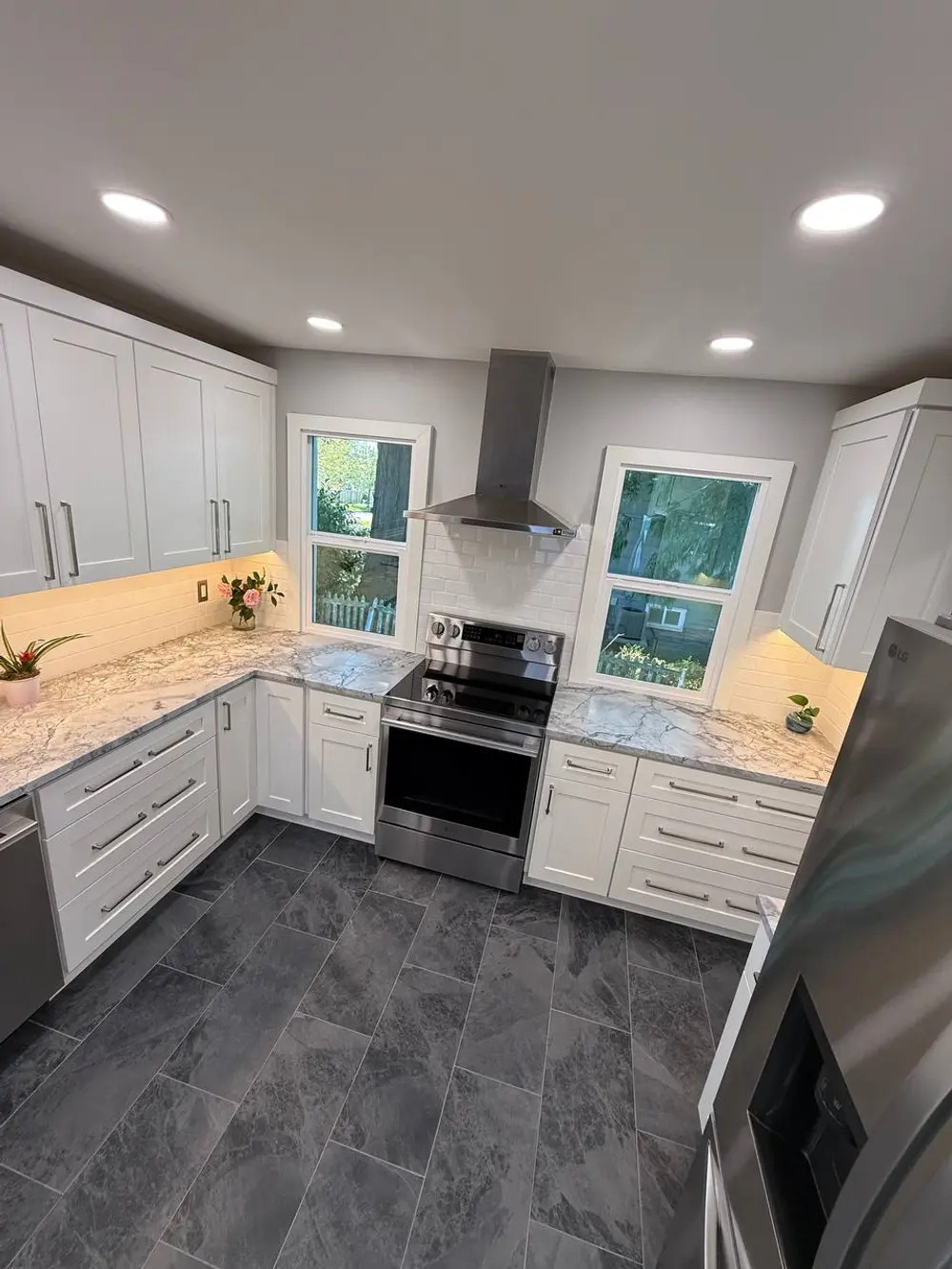
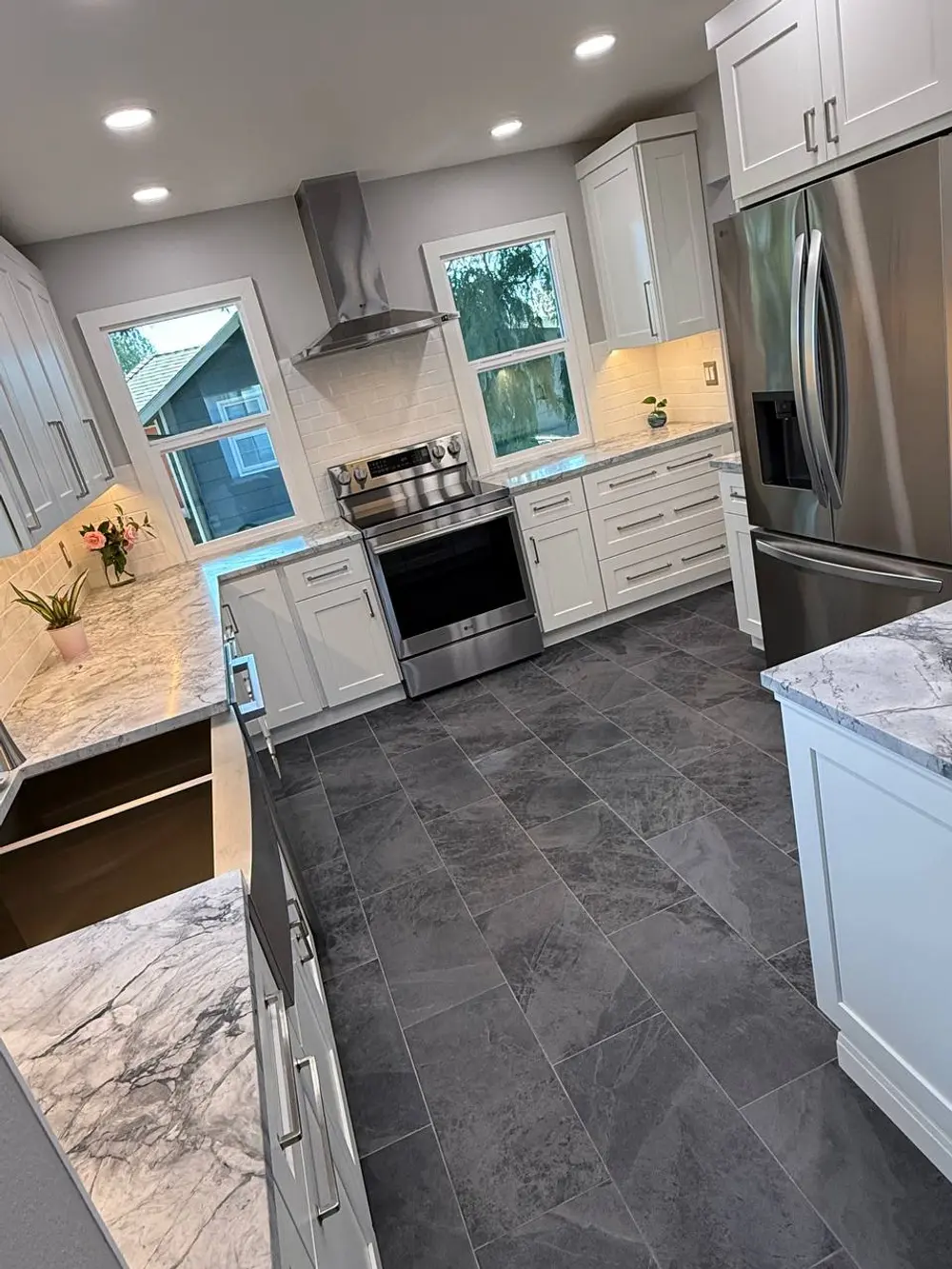
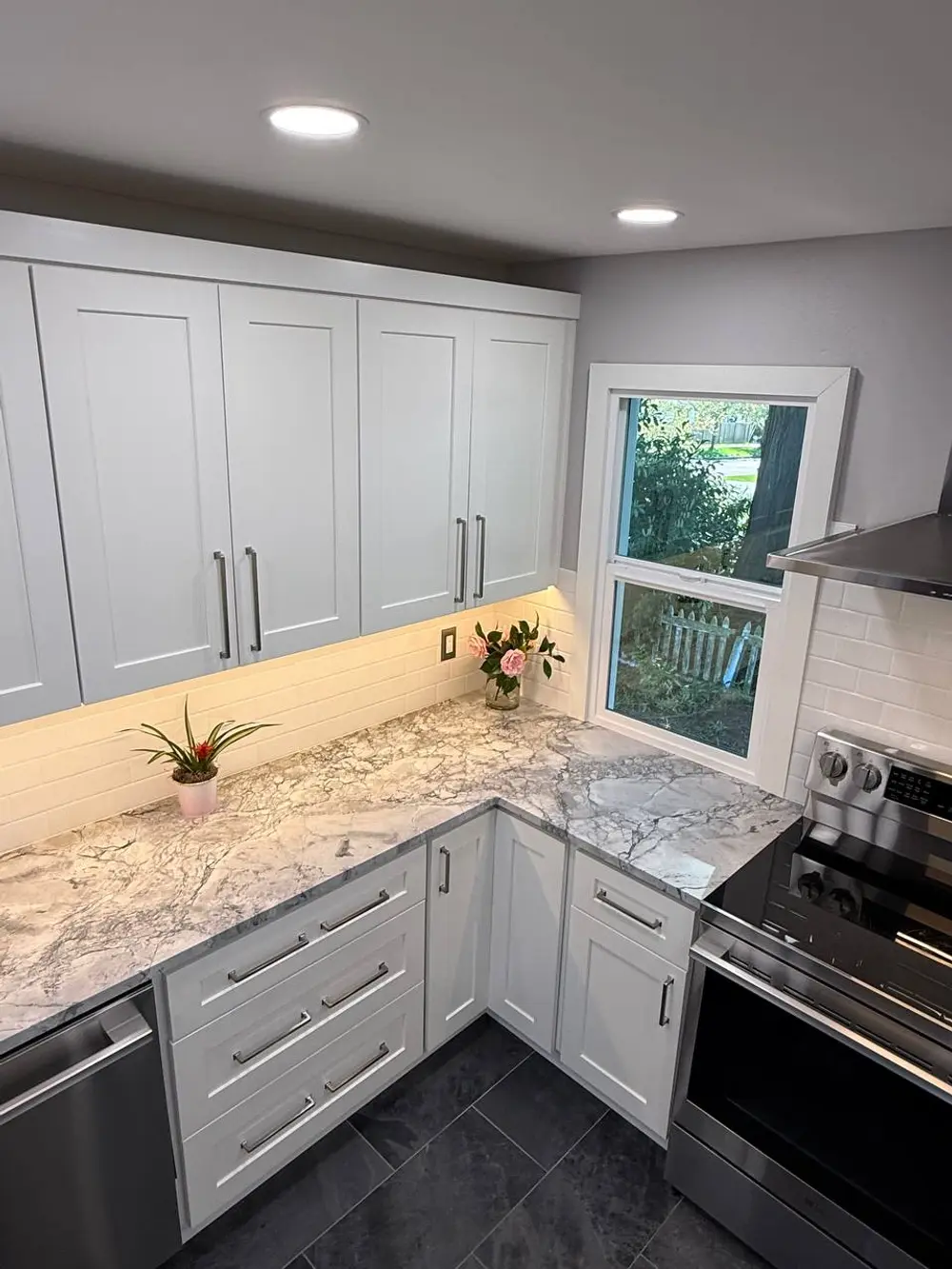
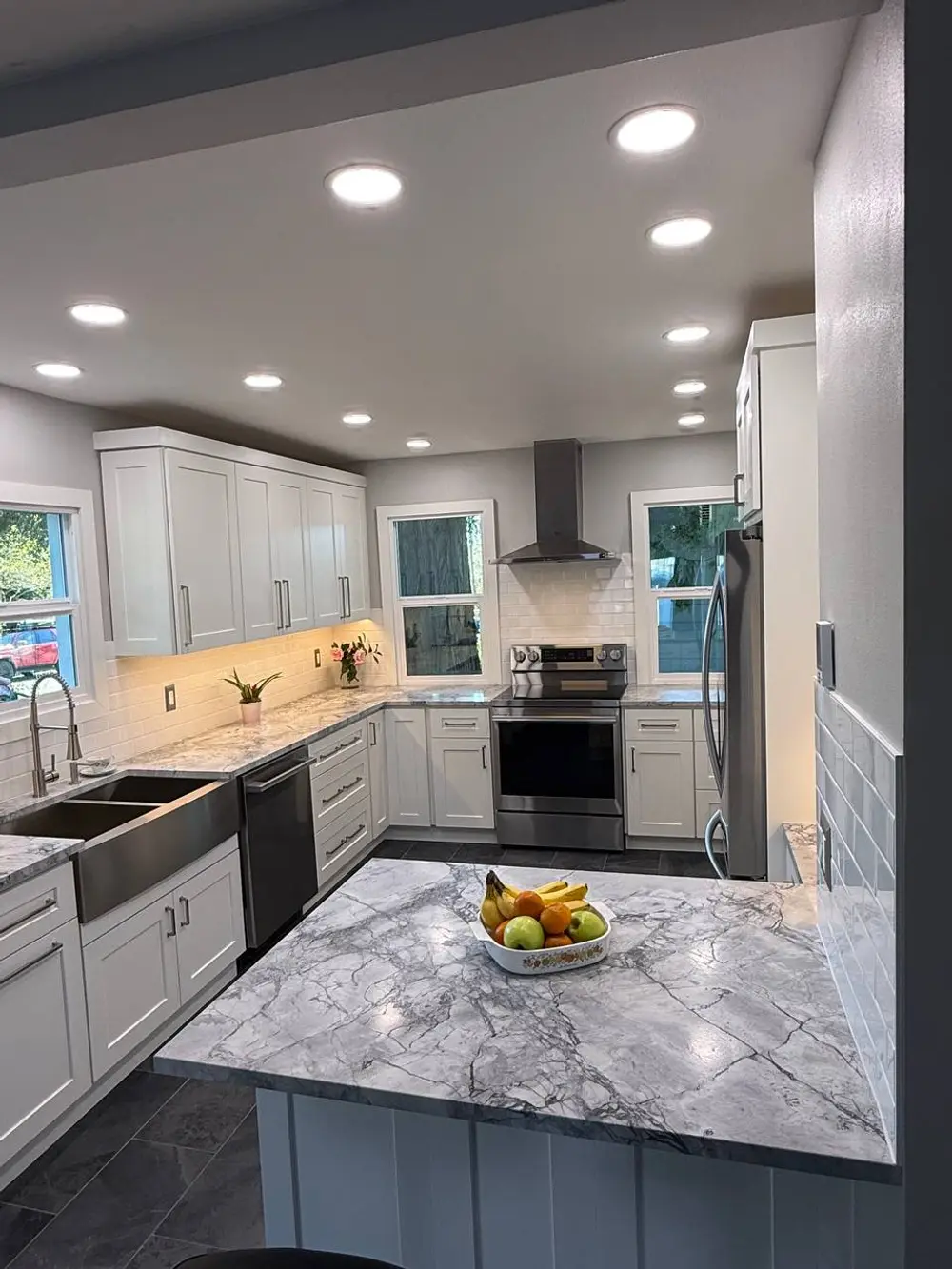
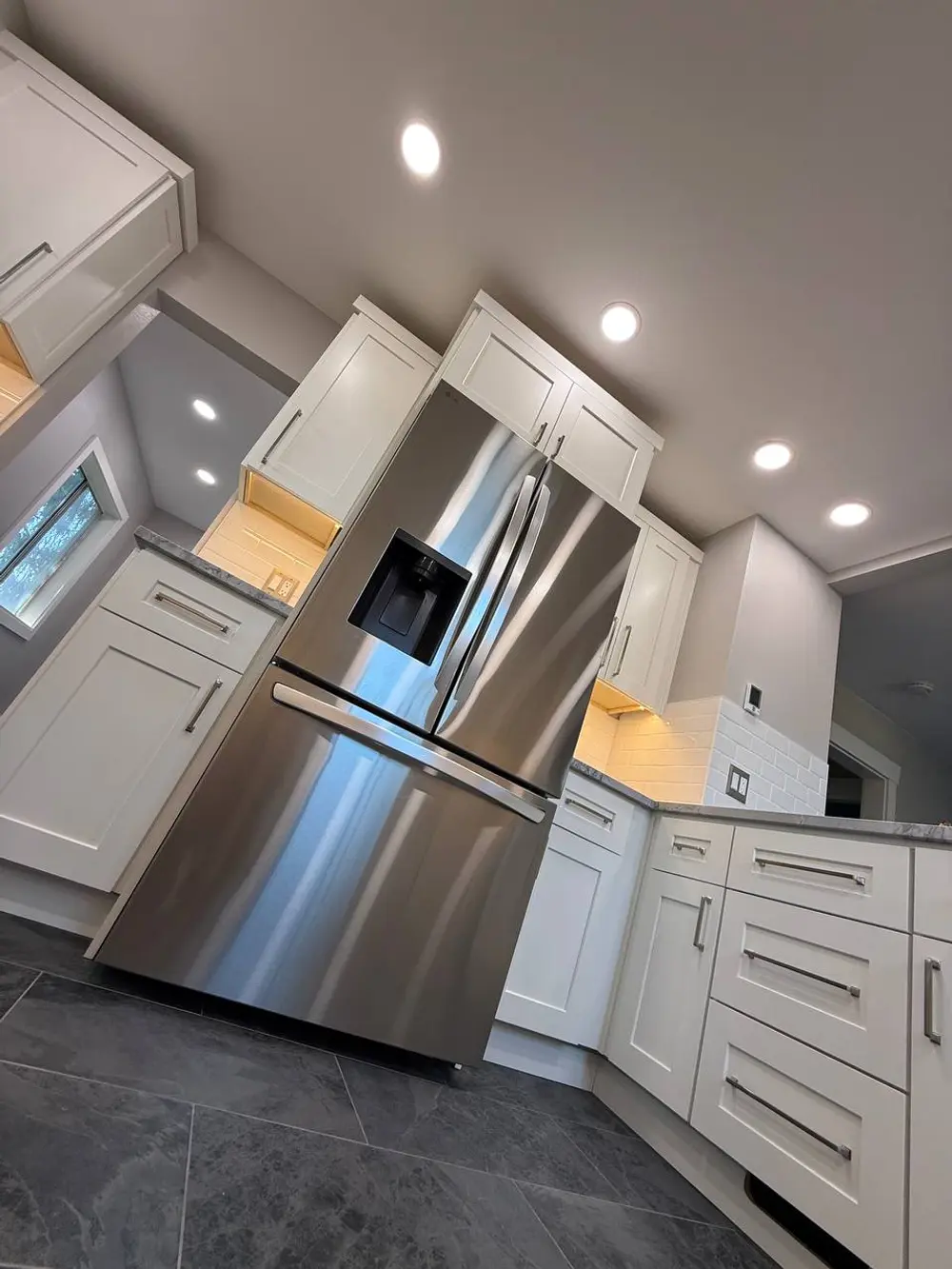
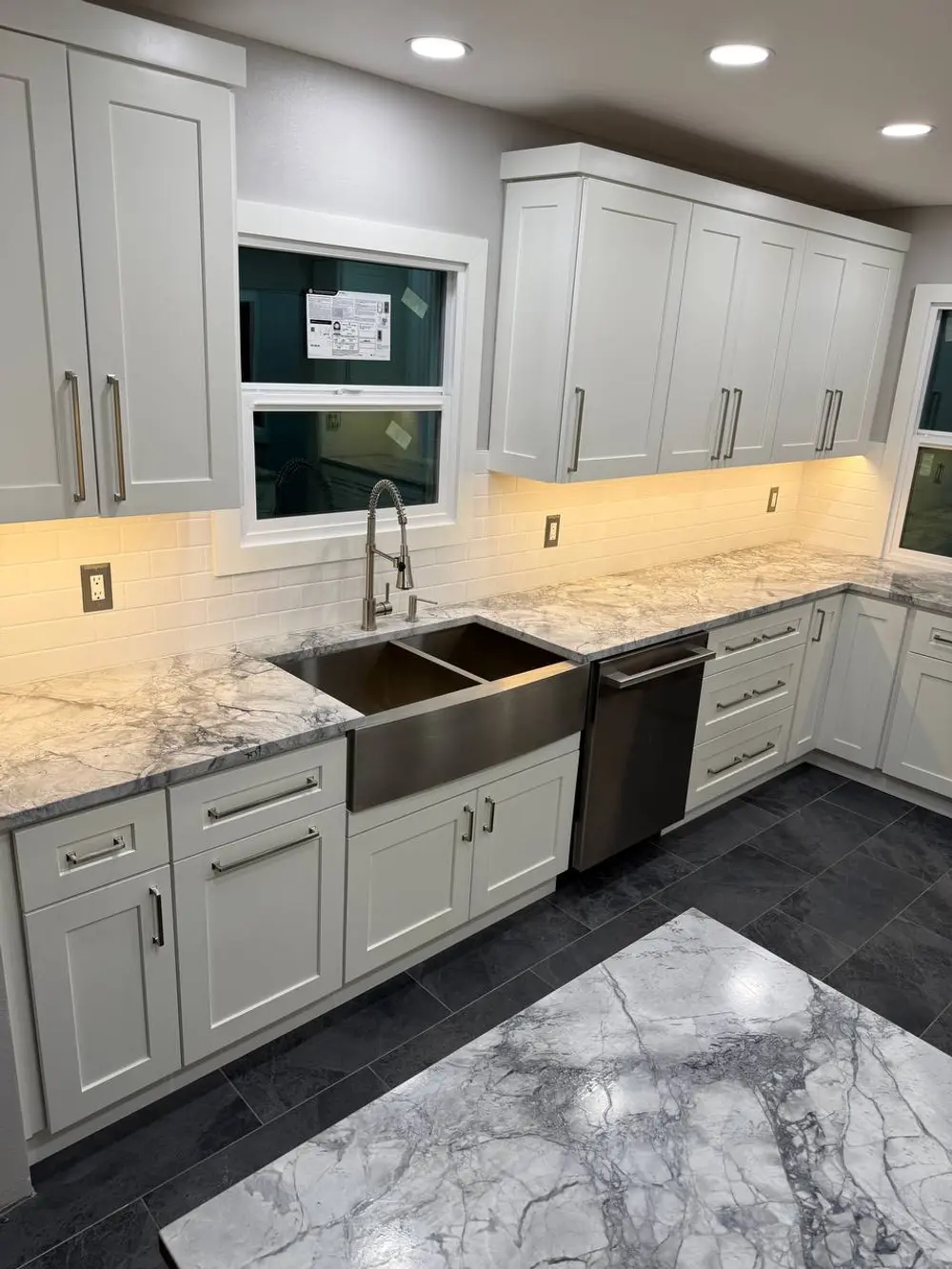
To pull every bit of natural light into a Seattle kitchen, the cabinetry was finished in white and the overall palette held to soft grays and whites. White cabinets bounce light around the room. Recessed can lights overhead replace the two old bulbs, and they are zoned and dimmable. Under-cabinet lighting illuminates the counters where the actual work happens. A dimmer over the peninsula lets the family shift the mood from morning bustle to dinner-party warm without changing fixtures.
Respecting the working triangle
Even with the wall gone, every kitchen still needs to function as a kitchen. The new layout follows the classic working triangle, with the sink, range, and refrigerator placed within easy reach of one another. No long walks across the room to grab a pot of pasta water.
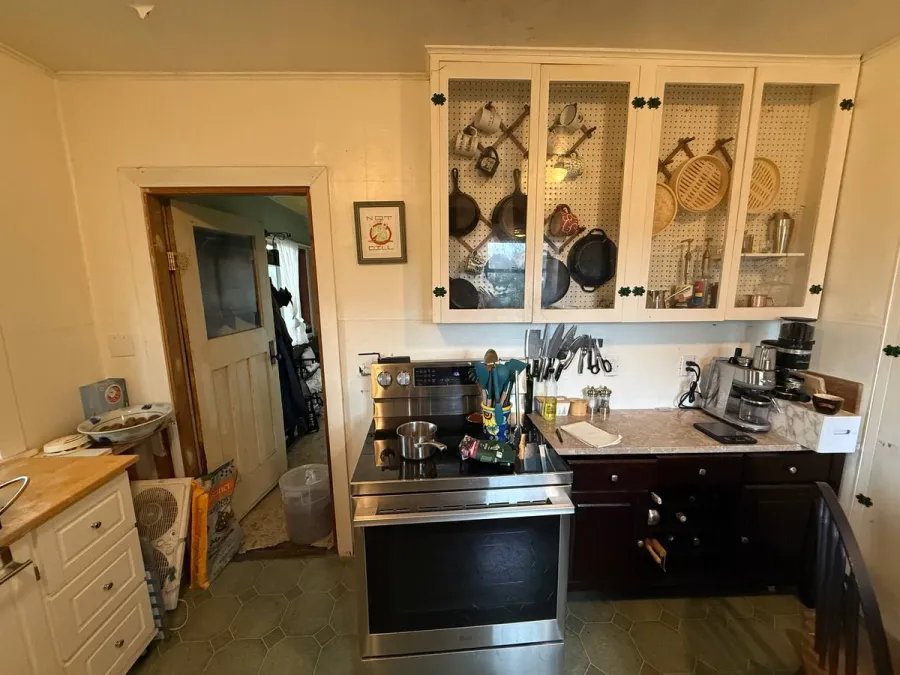
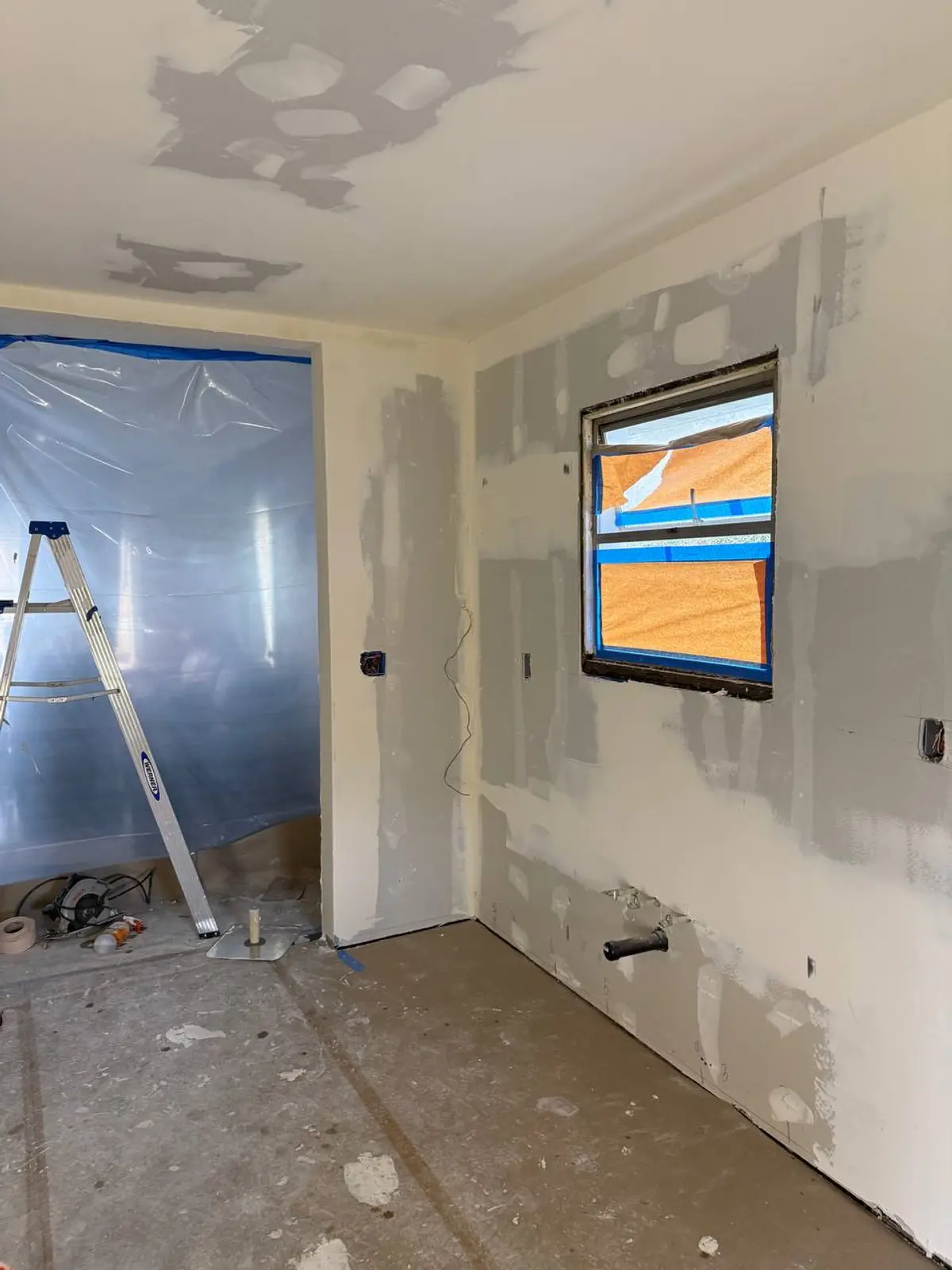
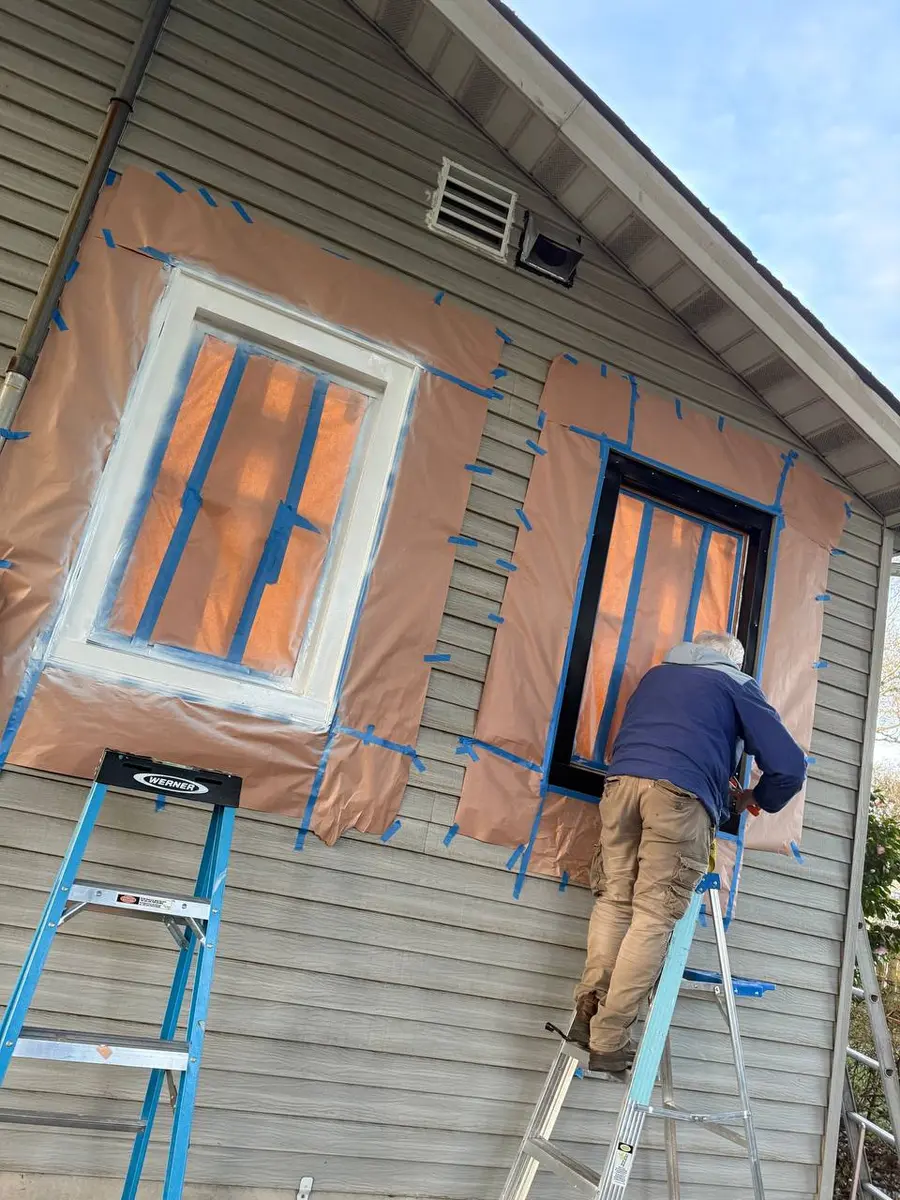
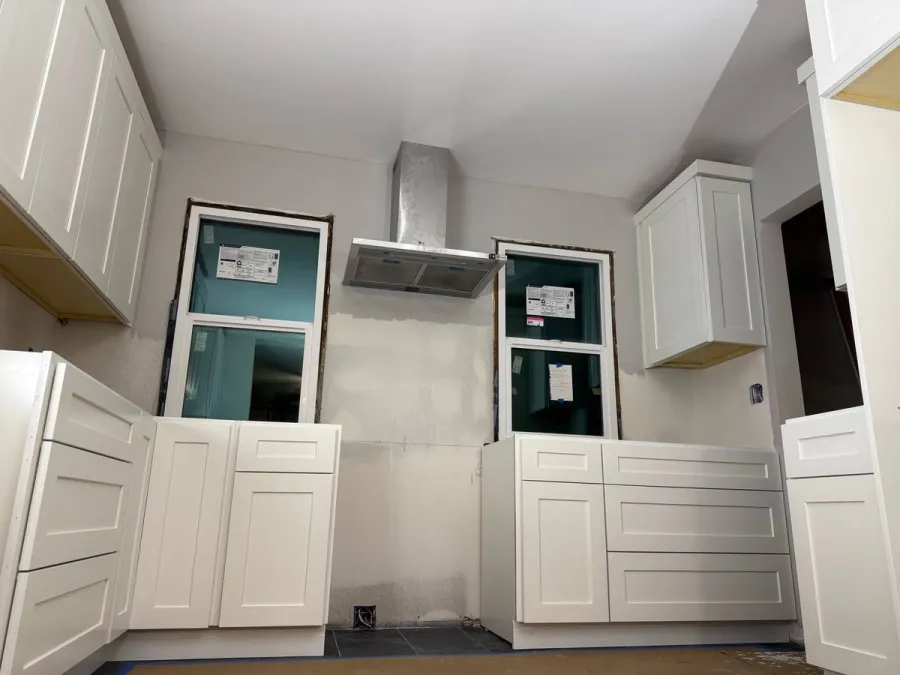
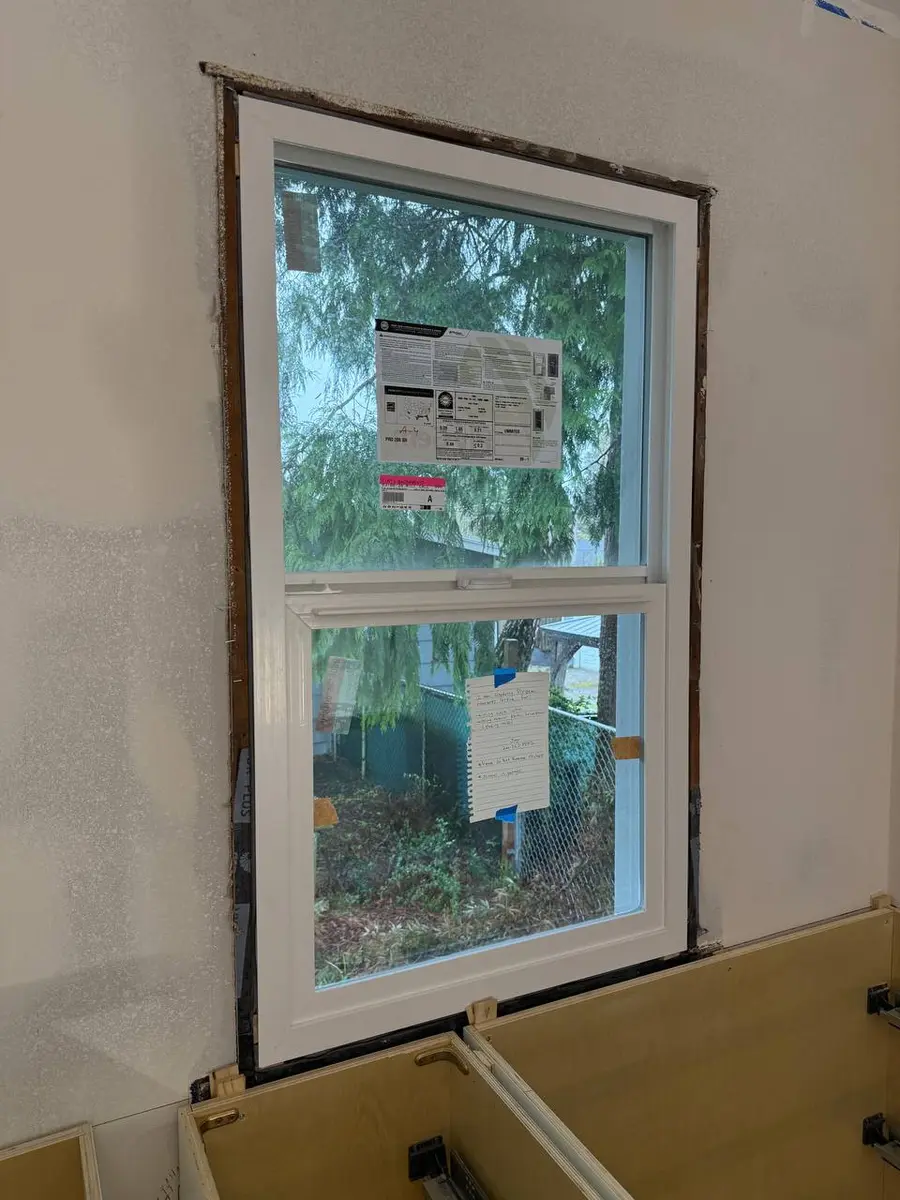
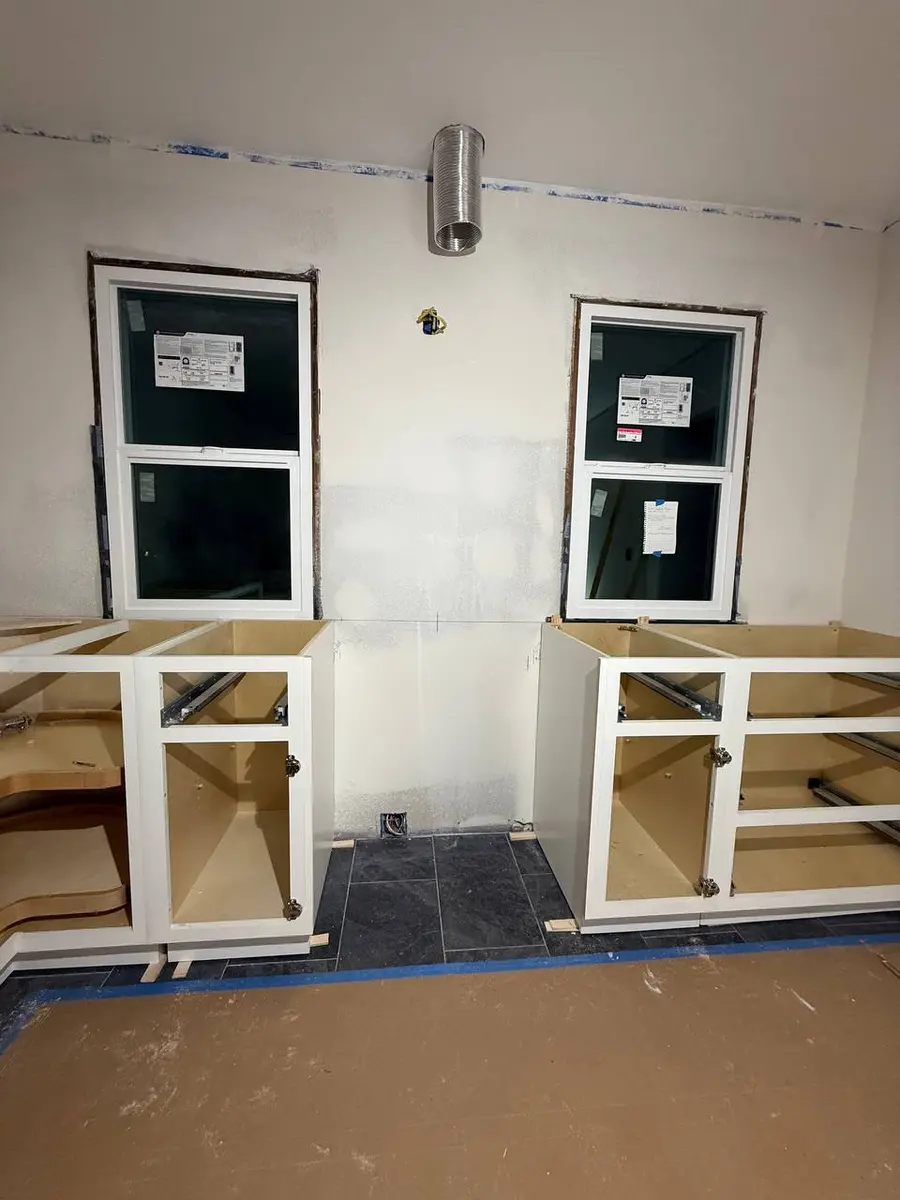
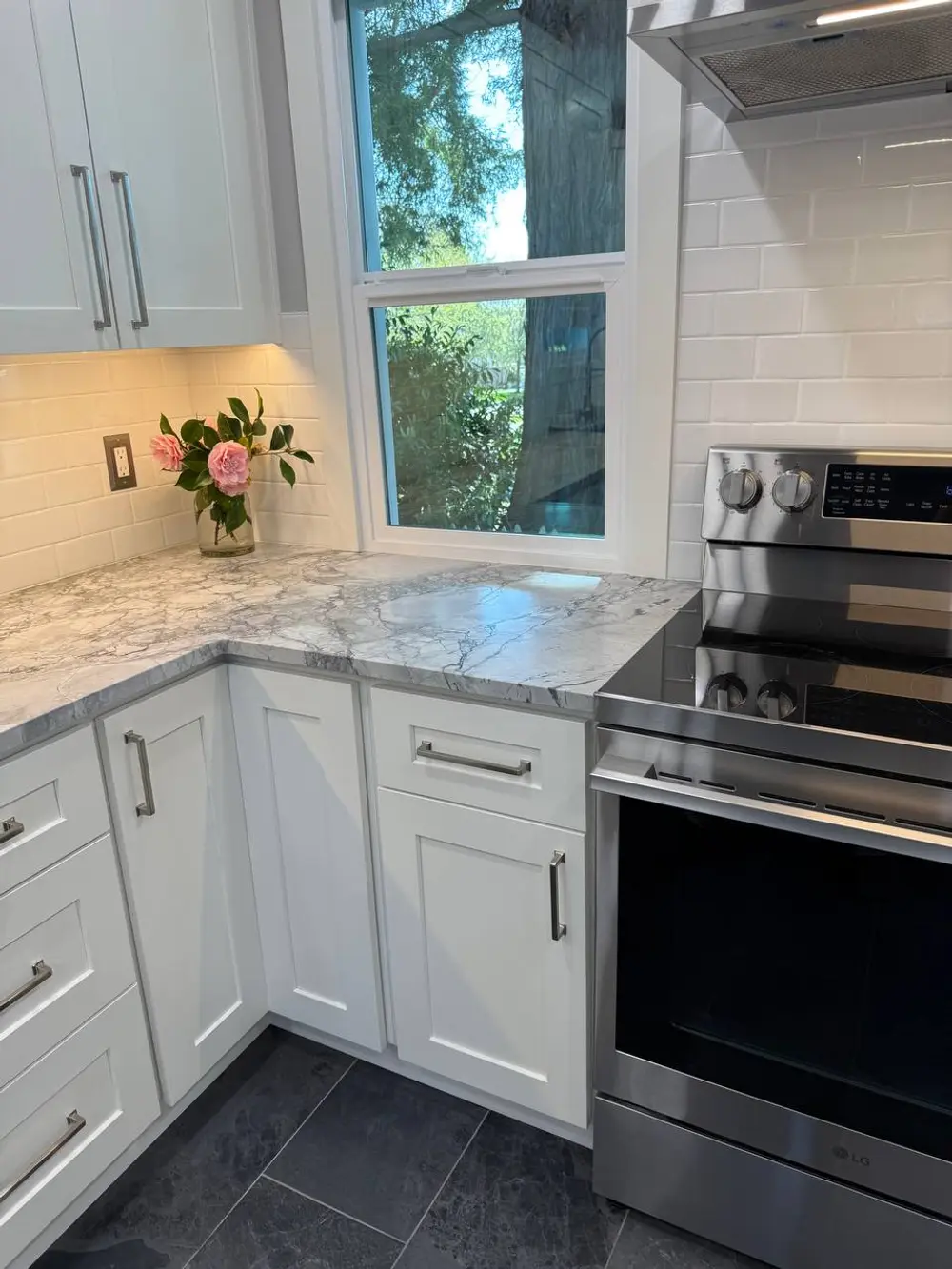
To make the range placement work visually, we shifted one of the new windows during the rough opening so that the range sits centered between the two windows. Small move, big payoff. The kitchen reads as designed rather than improvised.
Comfort underfoot, year-round
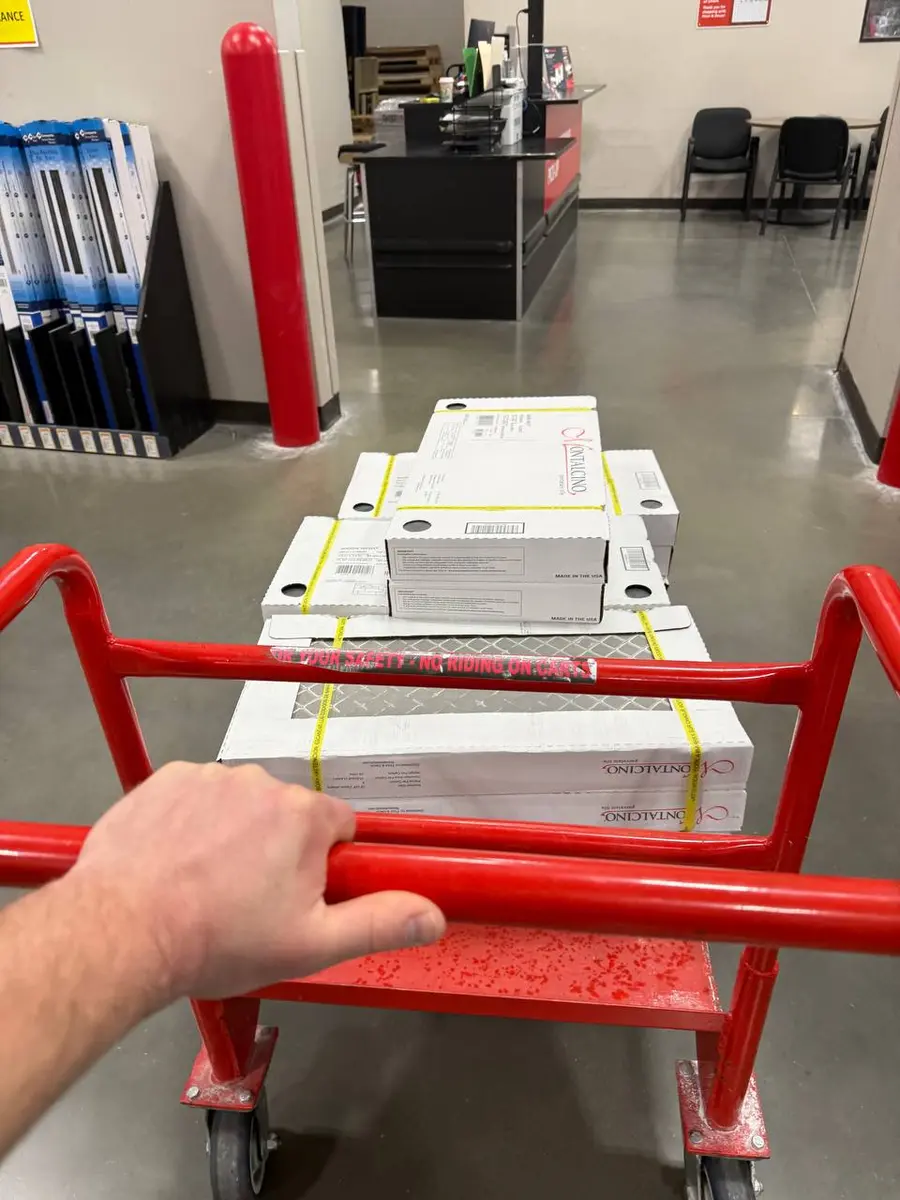
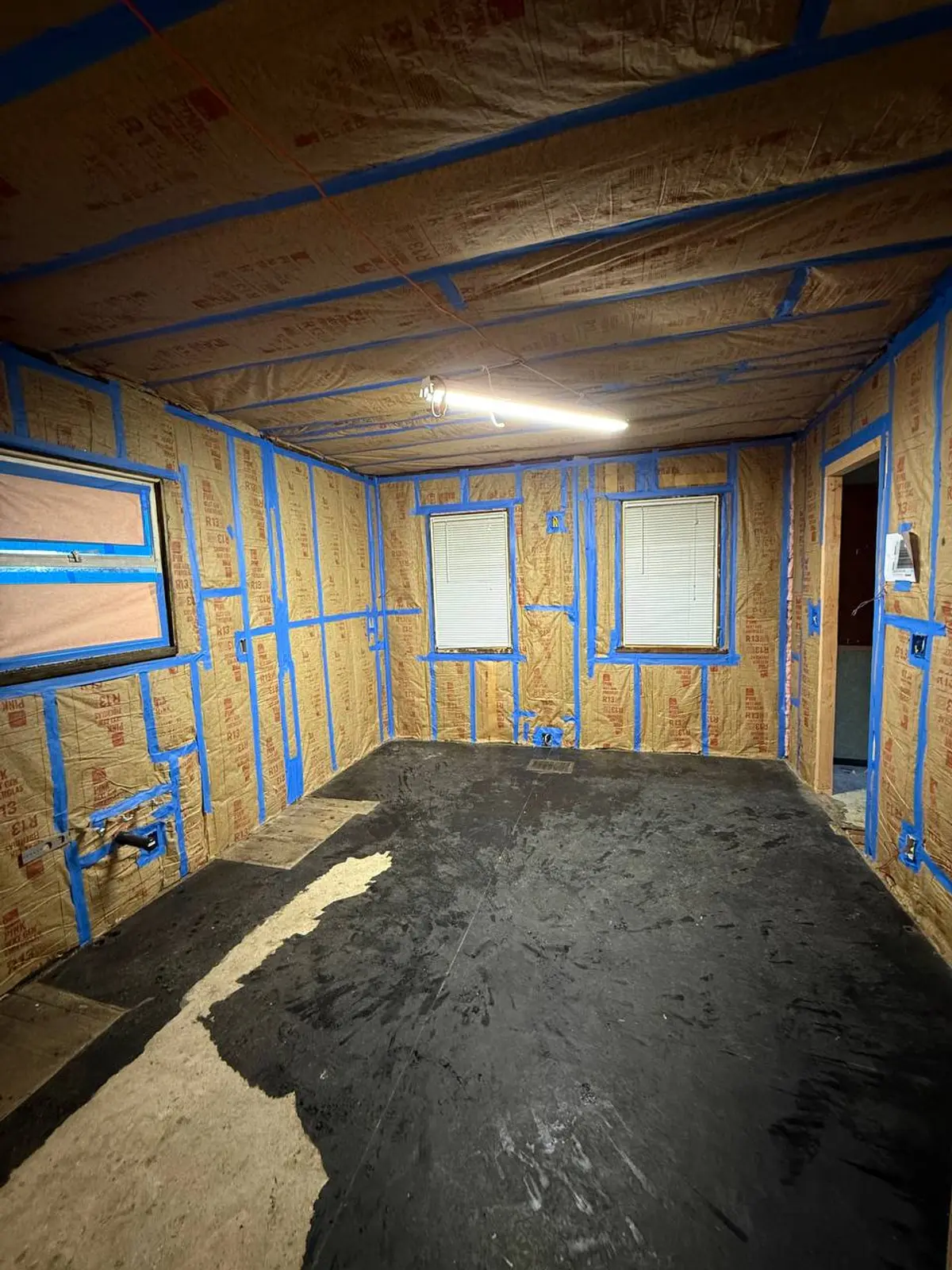
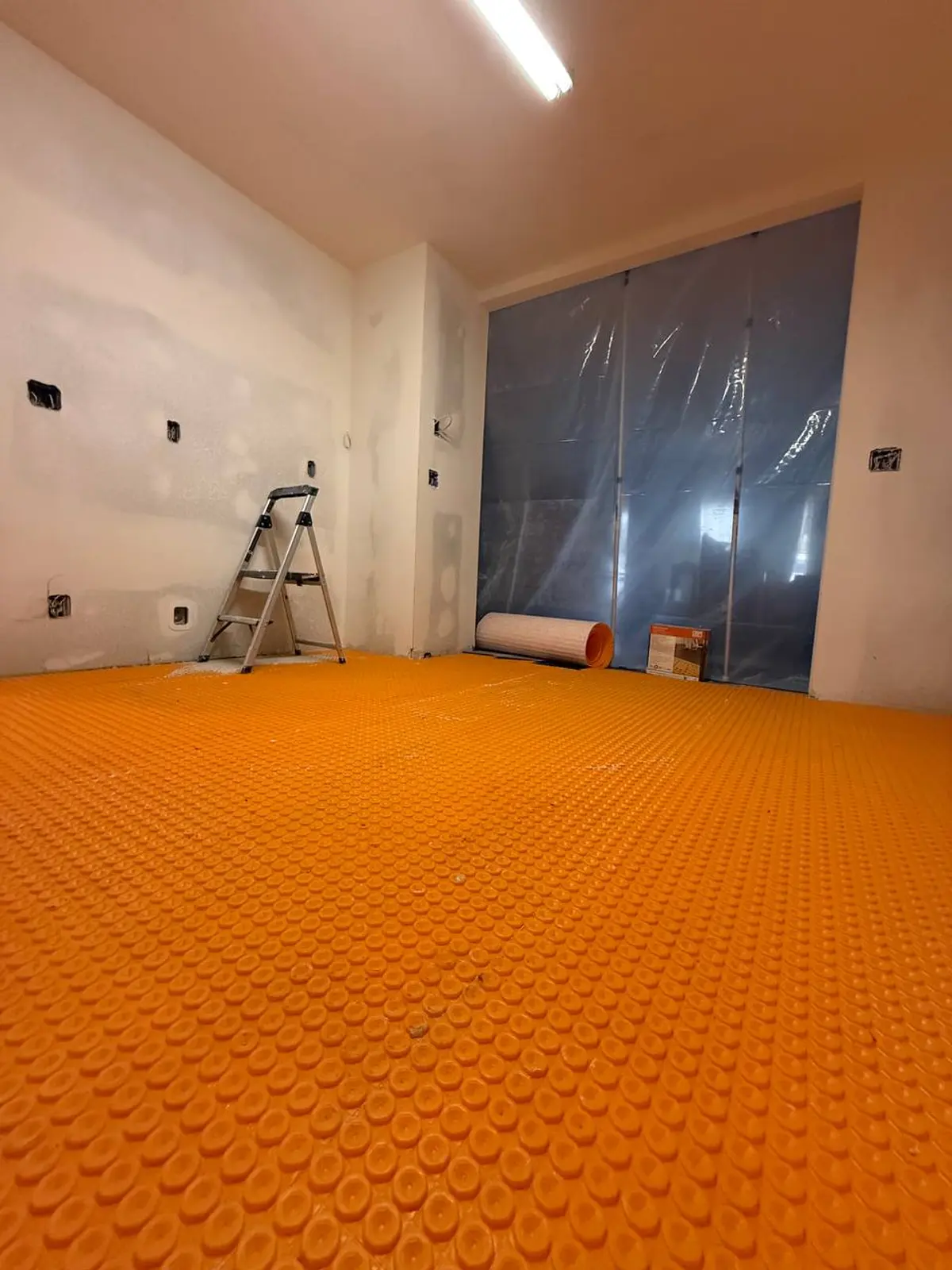
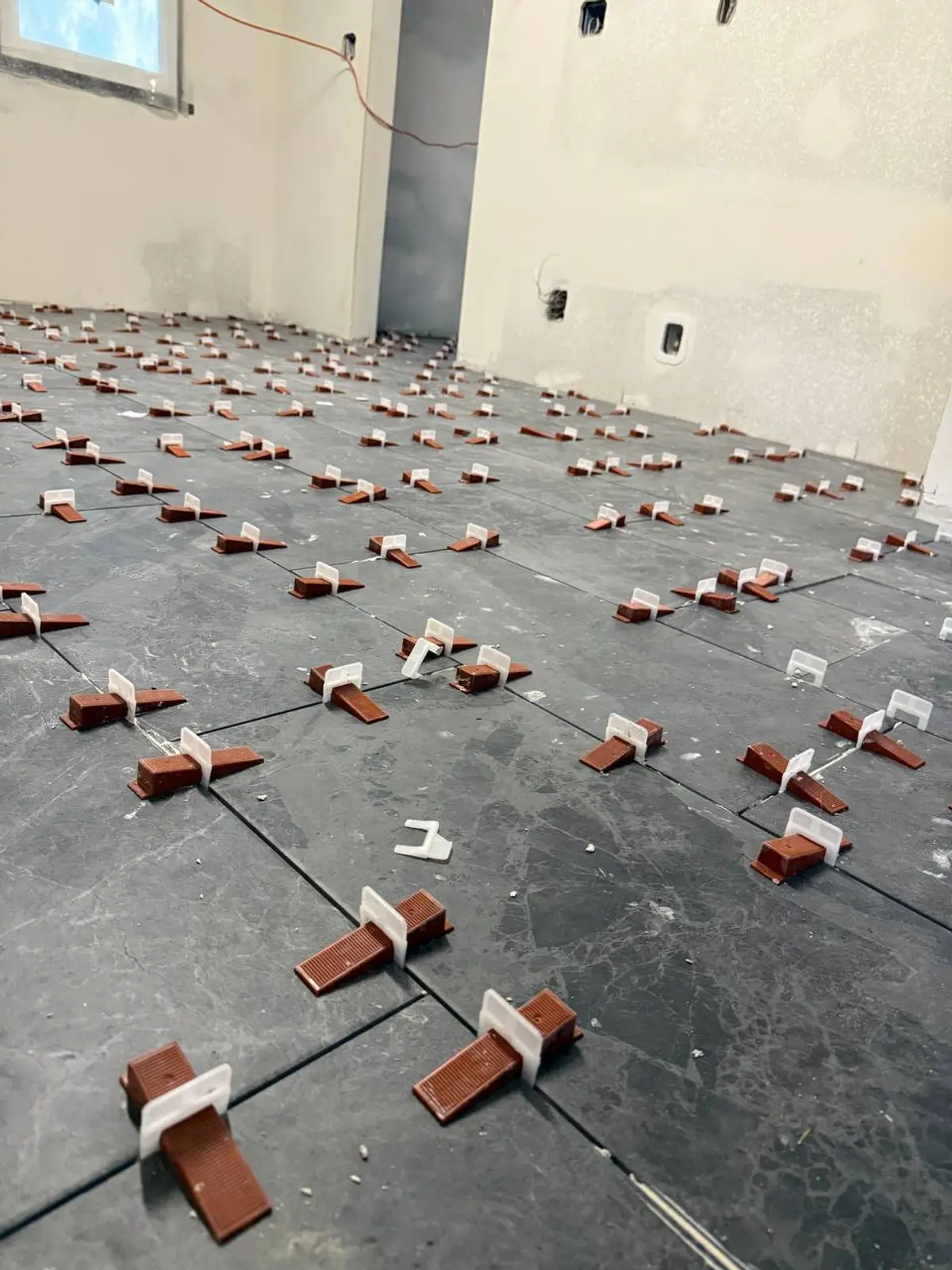
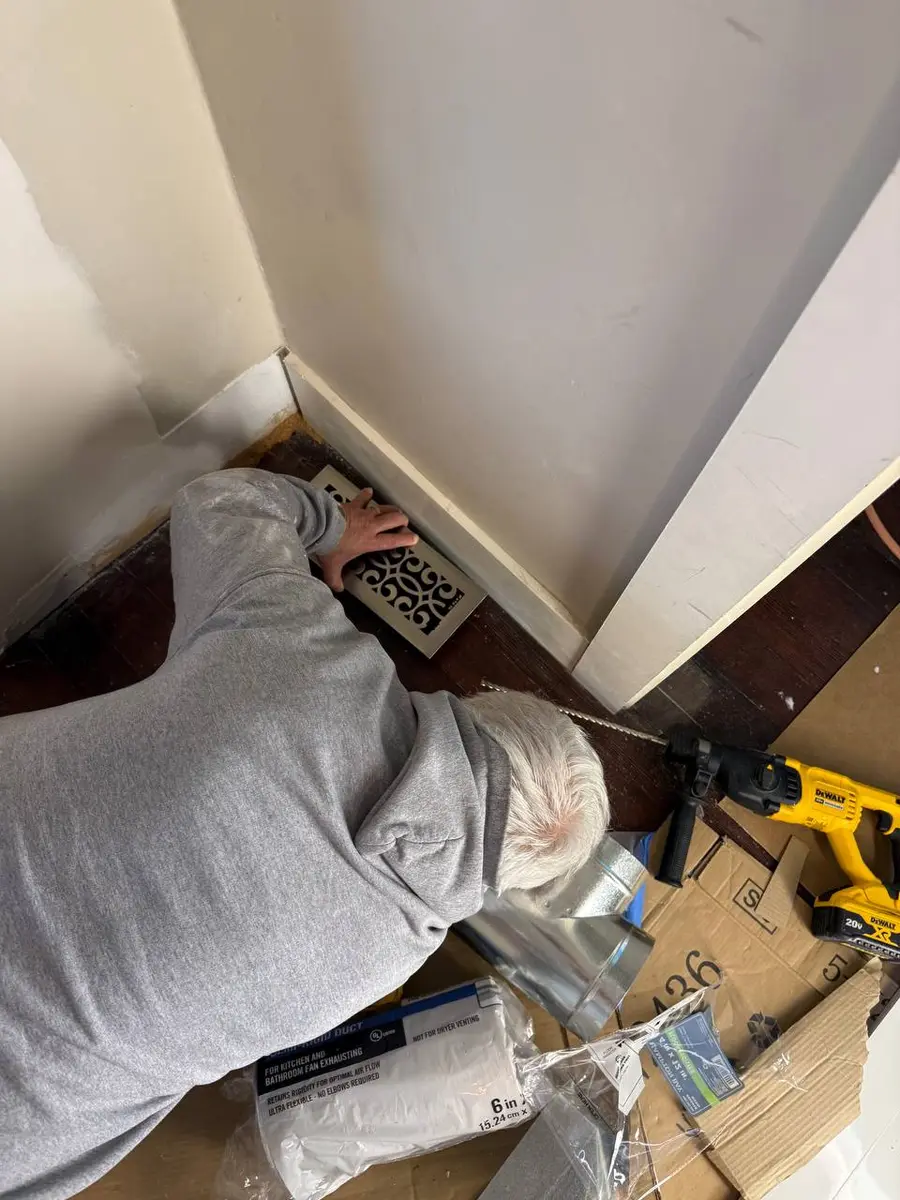
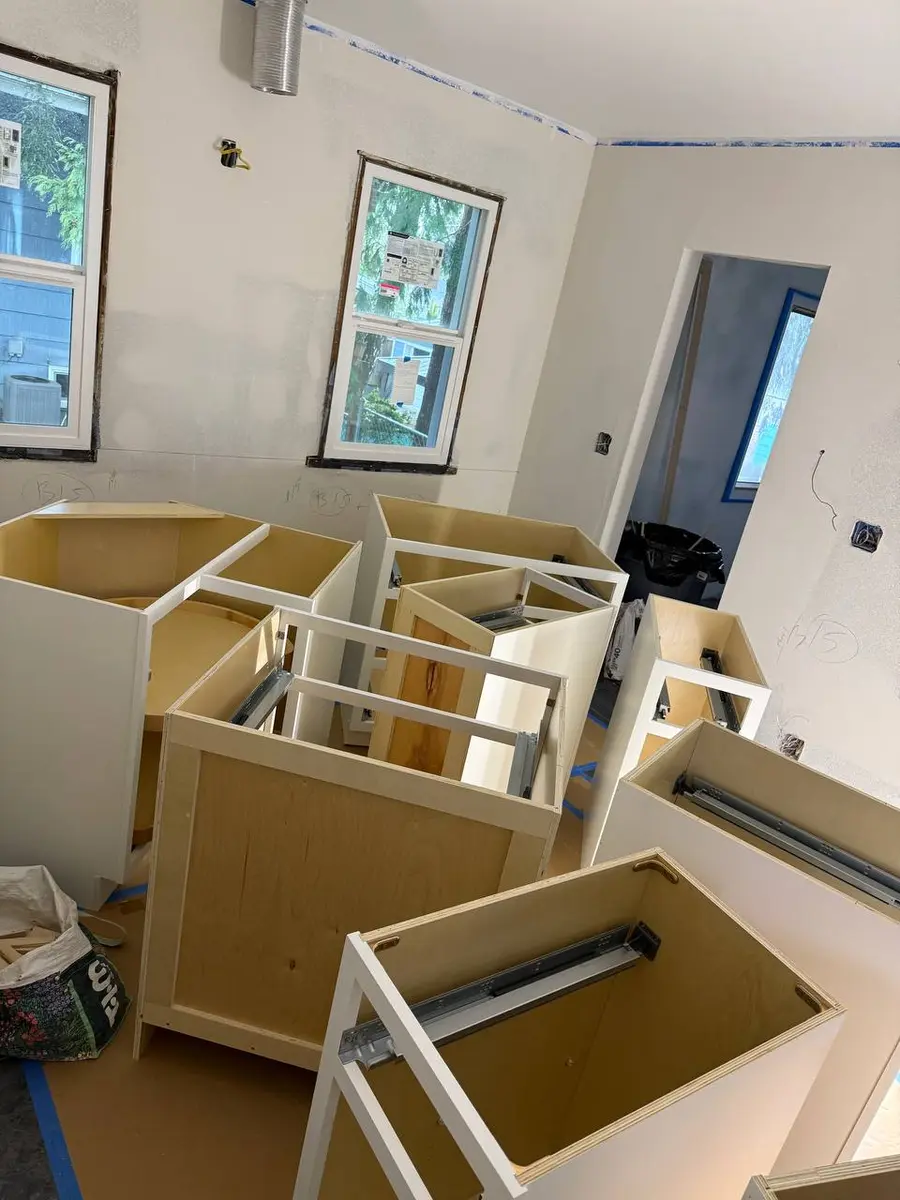
The old vinyl came up. New tile went down, with electric radiant heating mats installed in the kitchen, hallway, and the area where feet rest under the peninsula seats. In a Seattle kitchen this is what makes a tile floor livable from October through April. The heating duct that previously ran through a bulky chase on the kitchen wall was relocated to the living room side, freeing up wall space for cabinets and a cleaner elevation.
The details that make a kitchen feel finished
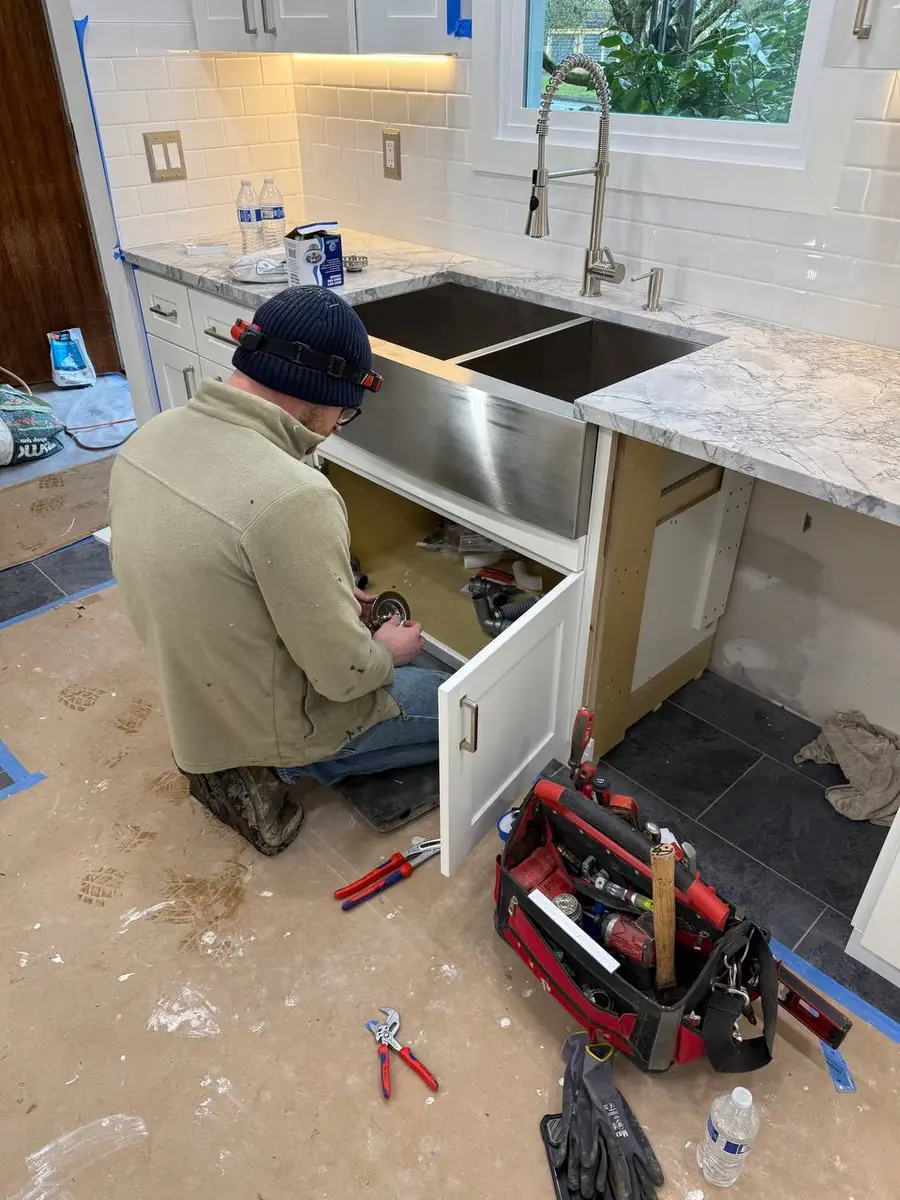
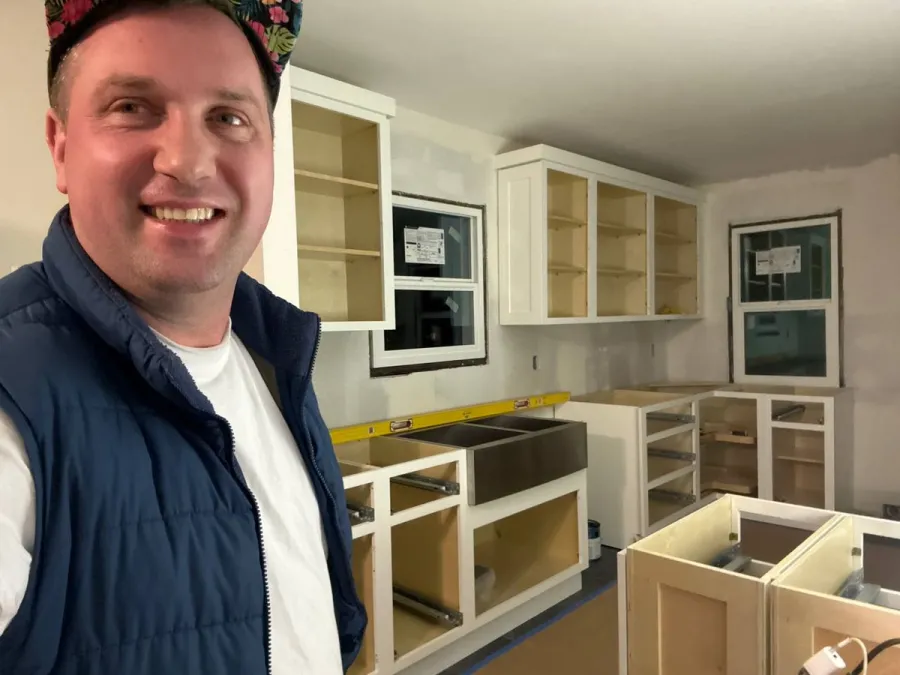
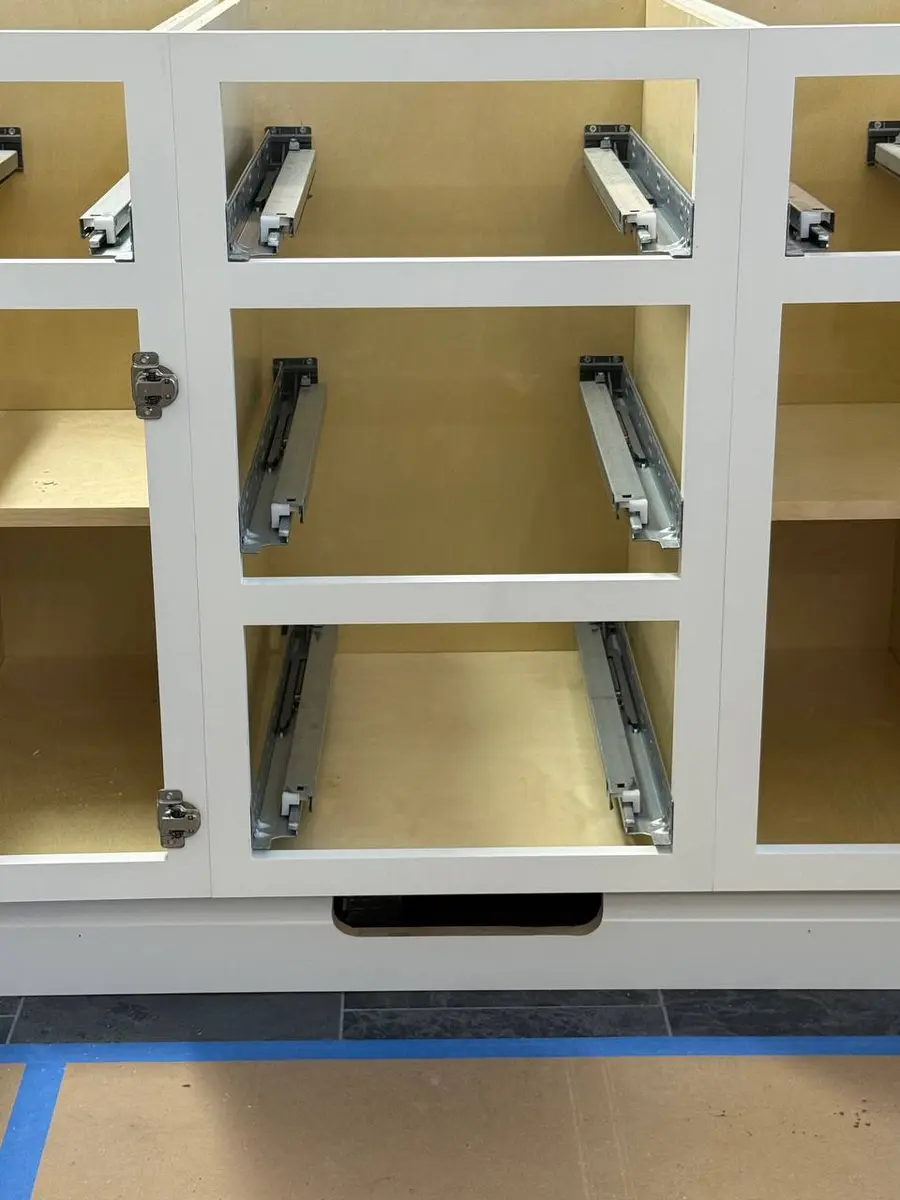
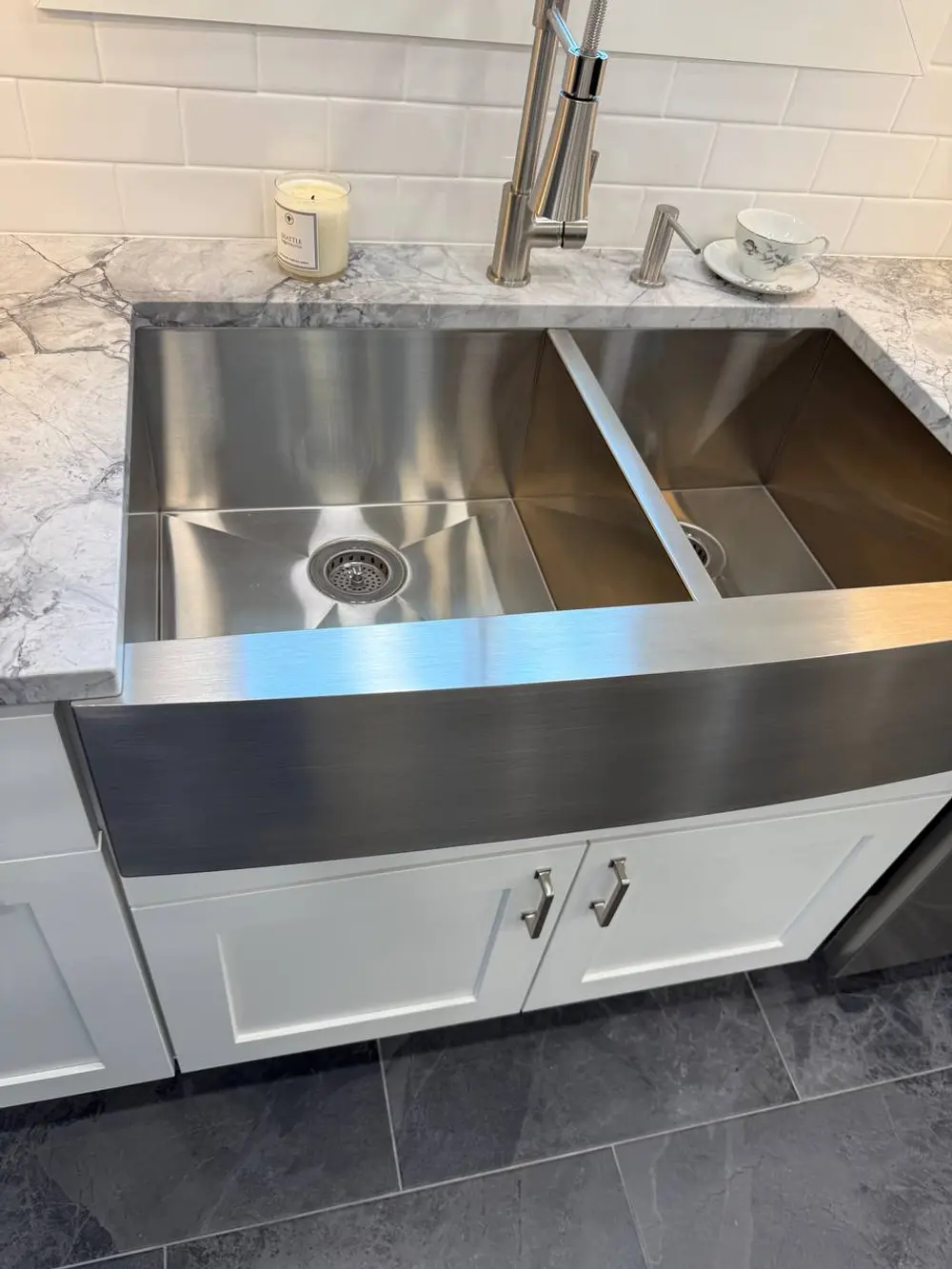
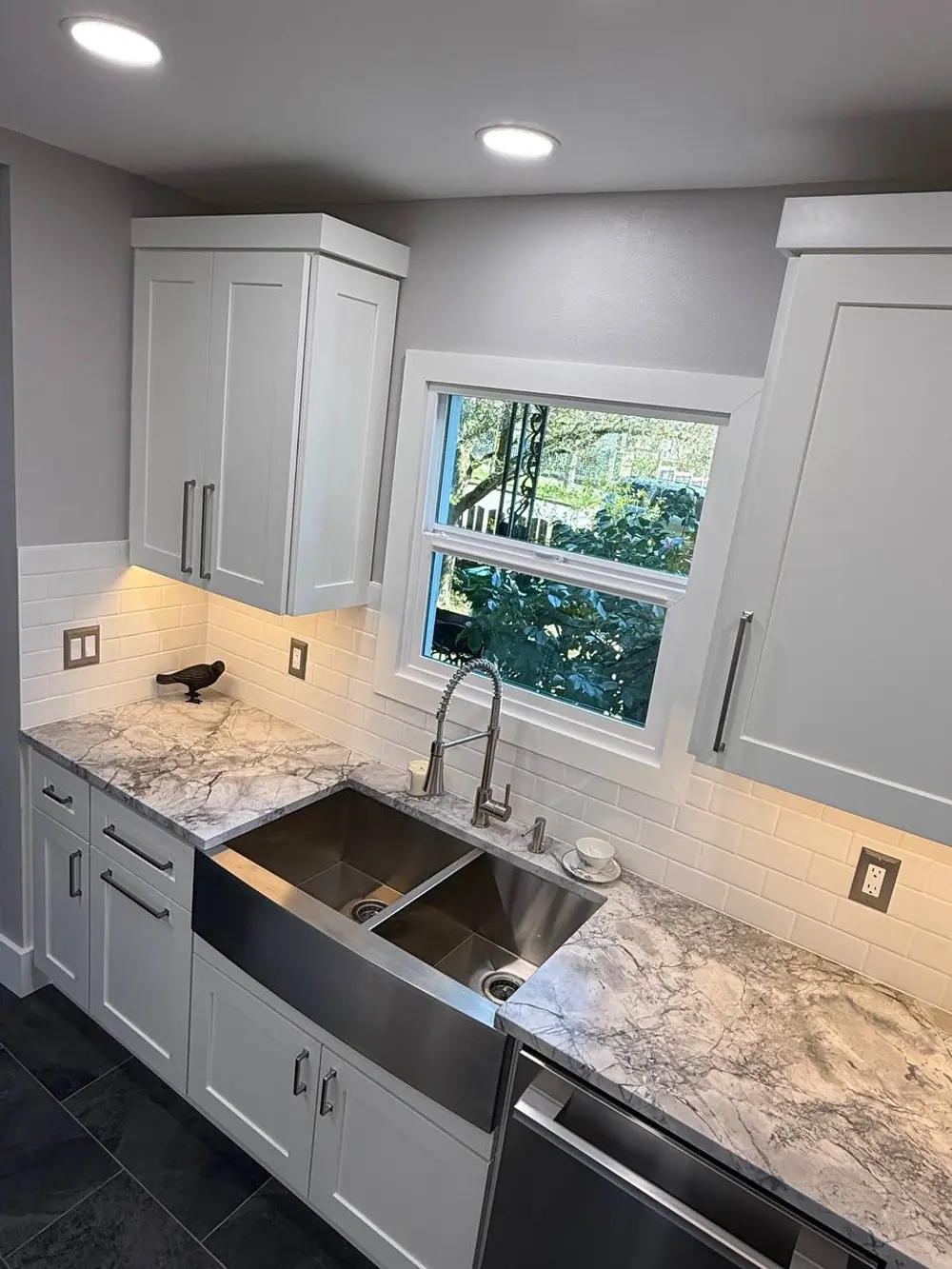
A farmhouse sink anchors the prep zone, both for the look and for the practical depth (washing a sheet pan in a standard sink is a small daily annoyance). A dedicated pull-out cabinet hides the trash and recycling. The new range hood vents directly to the exterior, which is a code requirement that older Seattle homes almost never meet. New plumbing supply and drain lines, new electrical service to the kitchen panel, and GFCI-protected outlets at every counter location.